
As digital technologies continue to advance, the connection between humans and machines is becoming increasingly close. Beyond accessing information, people and technical systems are now jointly involved in controlling, managing, and learning complex processes. Effective interaction between humans and so-called cyber-physical systems is therefore a key prerequisite for participation in society – regardless of age or physical abilities.
Within this context, Mixed Reality (MR) offers great potential as an immersive and accessible learning medium. By combining real and virtual elements, MR can support complex motor skill learning in entirely new ways. In our current study at CeTI, we explore this potential using juggling as an example. Juggling is a demanding motor task that requires precise timing, spatial awareness, and strong hand-eye coordination – making it an ideal test case for studying motor learning.
Study Goals
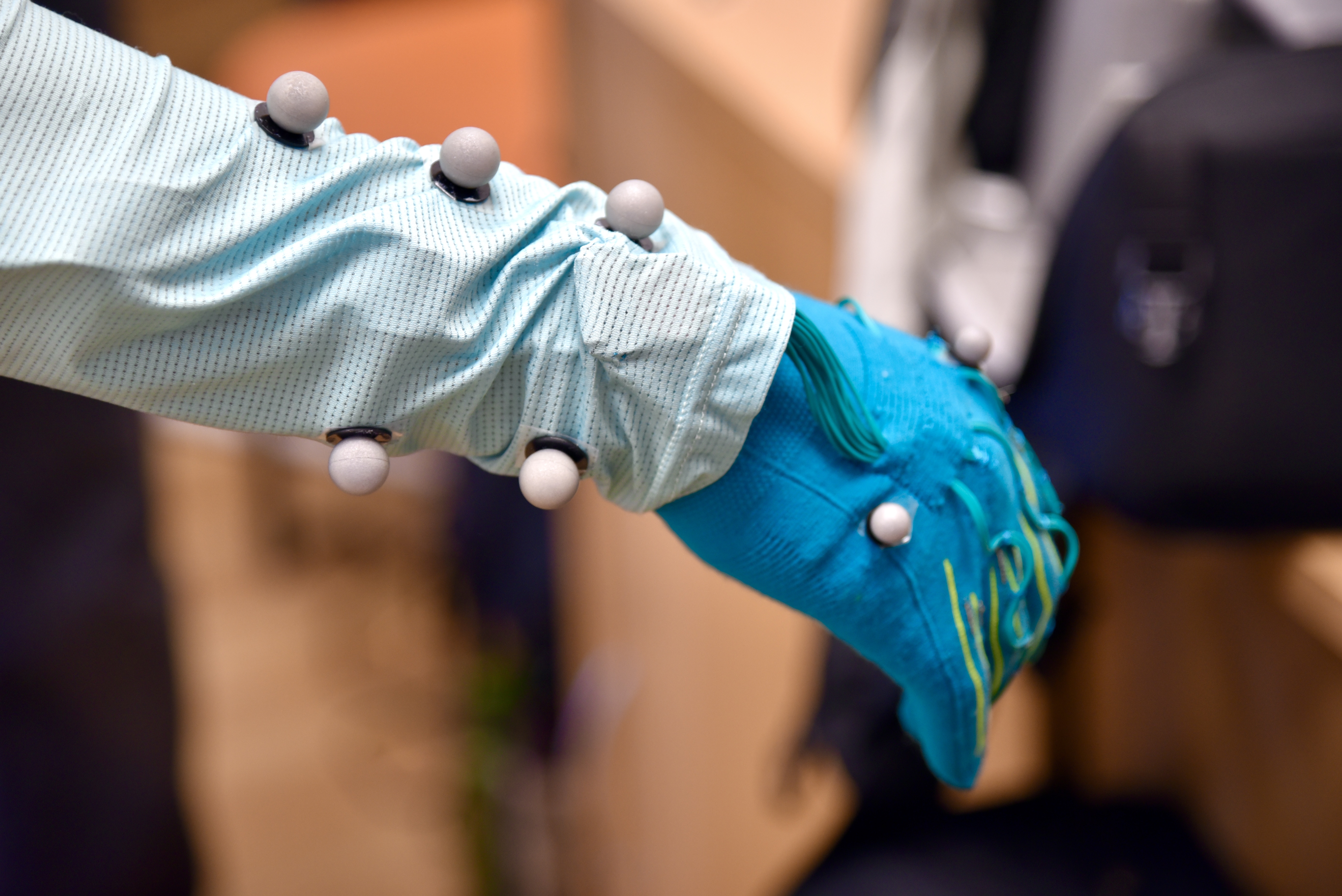
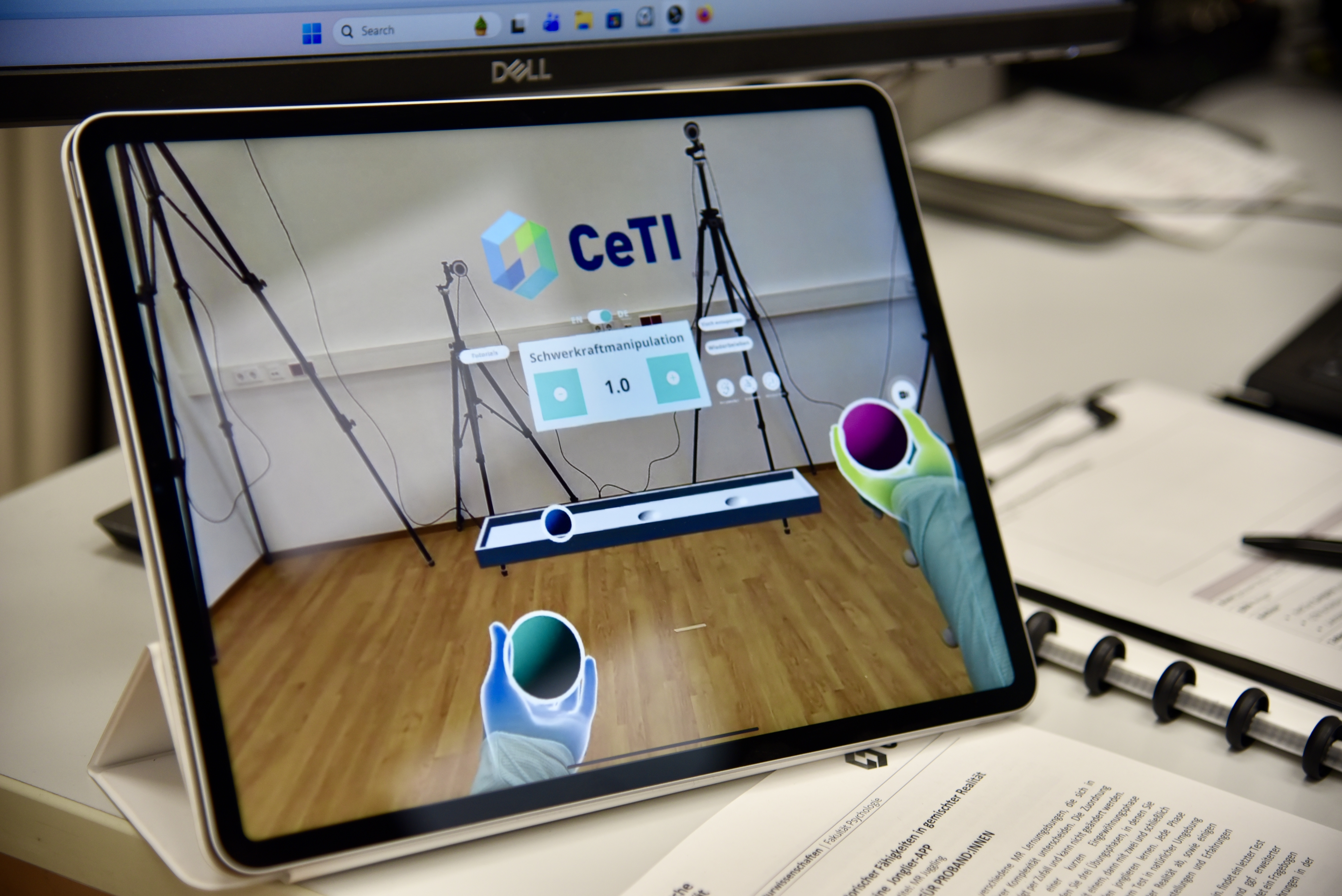
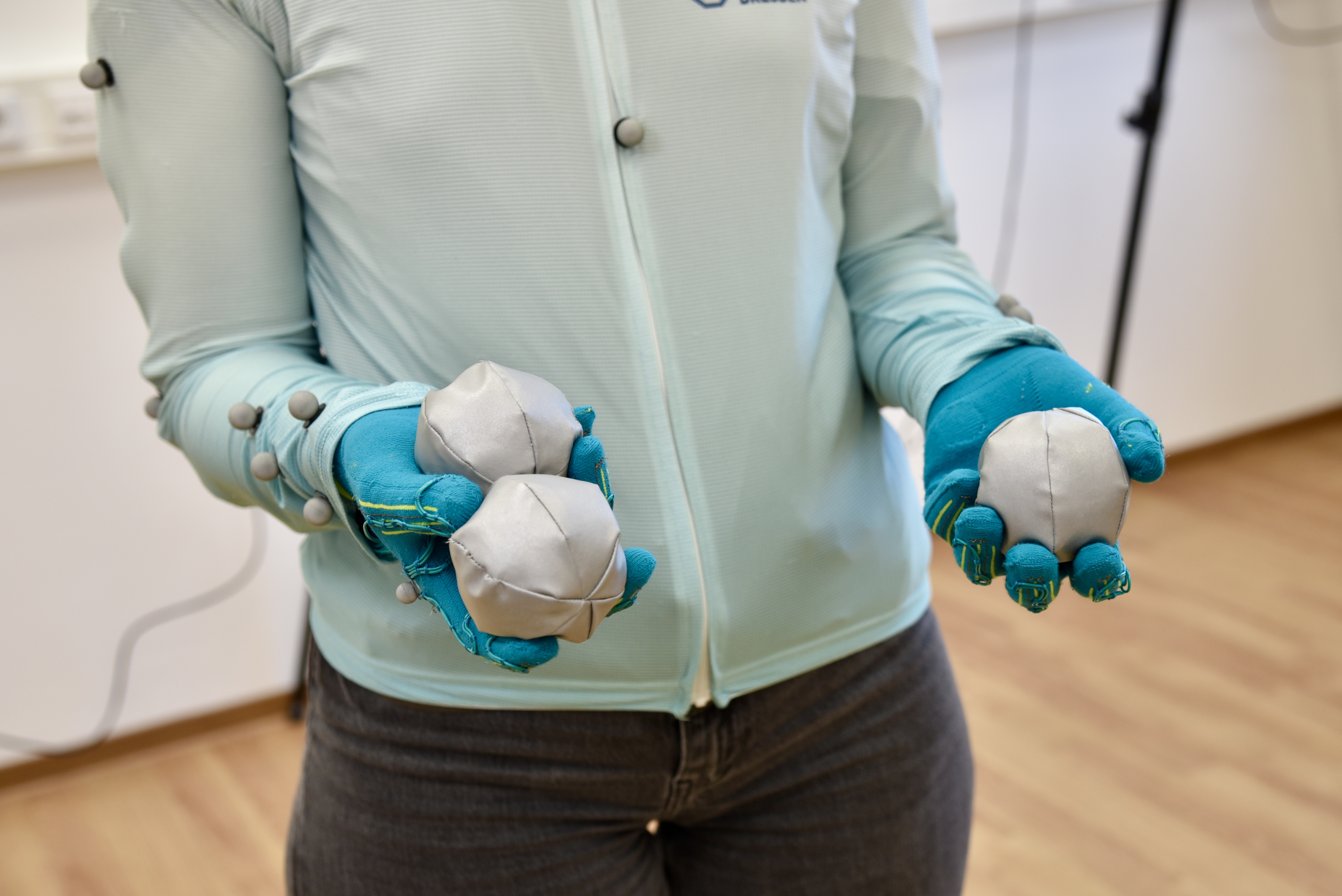
For the study, we developed a novel Mixed Reality learning environment that guides participants through three learning stages, providing personalized support throughout the process. The system allows users to interact simultaneously with real and virtual objects and enriches the learning experience with visual, auditory, and haptic feedback. In some scenarios, participants receive tactile cues via smart gloves to support their movements.
The goal of the study is to evaluate how this MR-based learning environment influences the acquisition of juggling skills. We are particularly interested in:
-
how haptic feedback affects learning and user experience,
-
how effective personalized tutorials are in supporting motor learning,
-
and how MR-based training compares to conventional juggling practice, including its advantages and limitations.
Participation at a Glance
-
Time required: approx. 4 hours
-
Who can participate:
-
Healthy adults without prior juggling experience
-
Aged between 18 and 45
-
Fluent German skills (spoken and written)
-
Normal or corrected vision (e.g. glasses or contact lenses)
-
Right-handed
-
-
Compensation:
-
€12 per hour or course credit (participant hours)
-
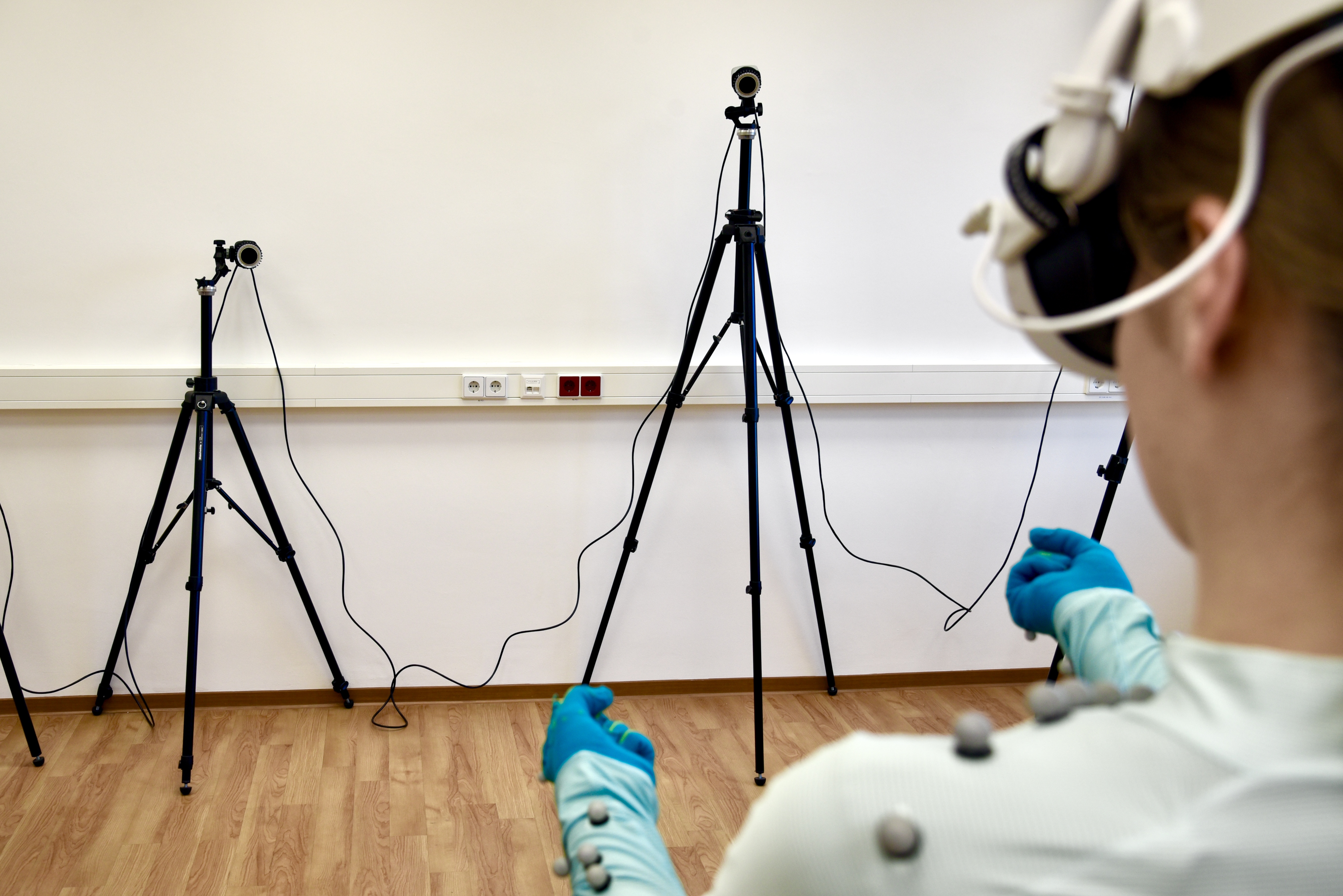
Starting in January, we are looking for participants to take part in this learning experiment using modern motion capture technologies, Mixed Reality, and haptic feedback. The results will contribute to a deeper understanding of how immersive technologies can support skill learning in future human–machine interaction scenarios.
Registration by email: studie.jonglieren@tu-dresden.de