
C1 Room

Humans

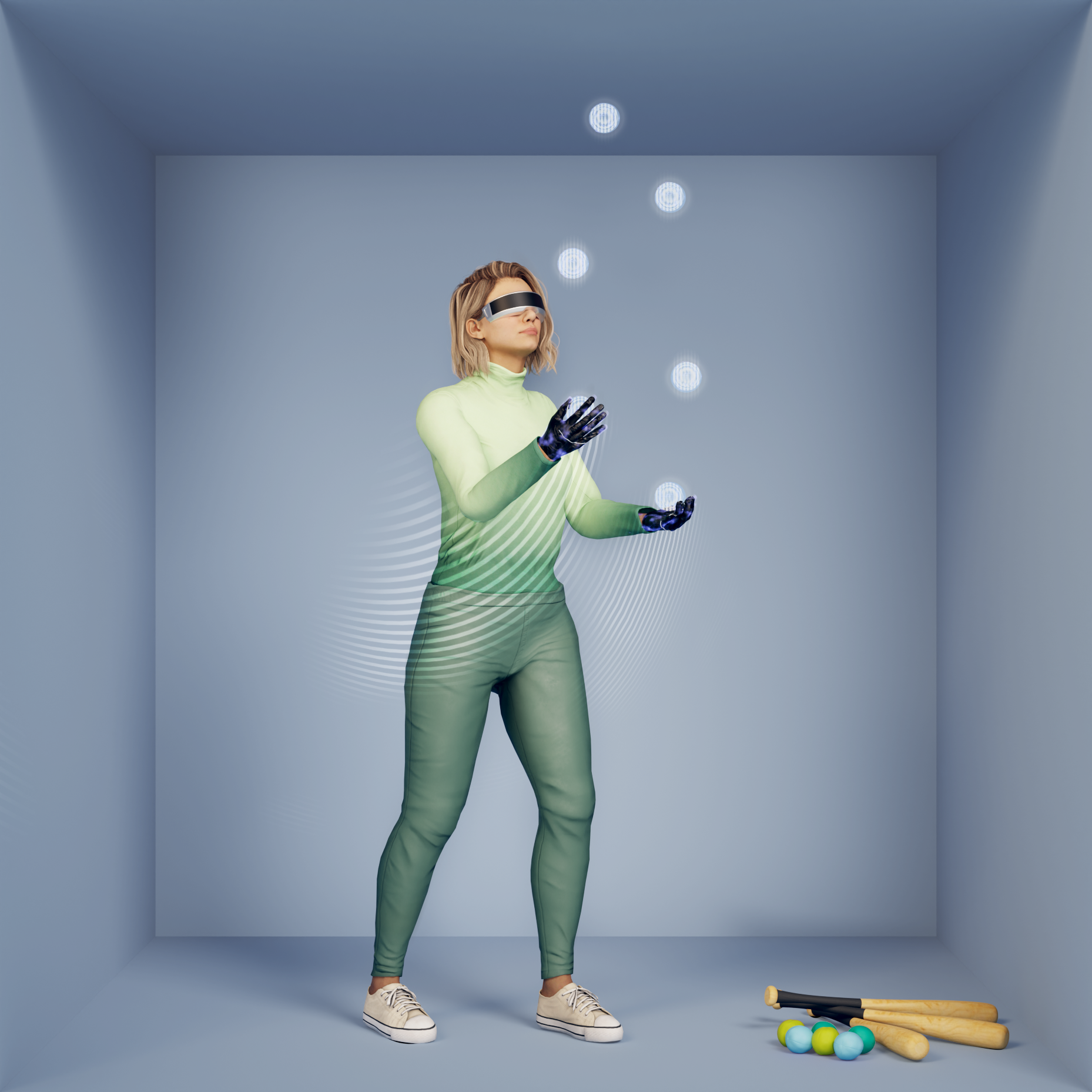
C1 supports the design of Tactile-Internet-enabled virtual or remote environments that promote the learning or execution of complex and collaborative sensorimotor skills that are facilitated by digitised multimodal feedback.

Key Questions

This question explores how adjusting feedback in real-time based on task difficulty and learner performance can make the learning process more efficient and engaging.

This question investigates how feedback can guide coordination and improve communication between human or human-machine collaborators, fostering better teamwork.

This question addresses how to create personalized feedback systems that take into account the user’s age, expertise, and task constraints, ensuring the feedback is relevant and effective for each learner.

Approach

Adaptive feedback using AI and motion capture for individual and collaborative skills in immersive settings.

Expected Results

Development of adaptive feedback systems and validation in real-world applications.

Our Latest Research Results

  • The Psychology of Trust in High-Risk AI Systems

    As Artificial Intelligence systems rapidly transition from passive tools to active teammates in healthcare, workplaces, and education, a critical question emerges: Is it enough for a system to be rel ...

  • The Illusion of Certainty – Why We Over-Trust Our Sense of Touch

    We often believe that seeing is believing—but when it comes to true certainty, we tend to rely even more on what we can physically feel. A special new study from the ConTakt Lab at TU Dresden dives i ...