

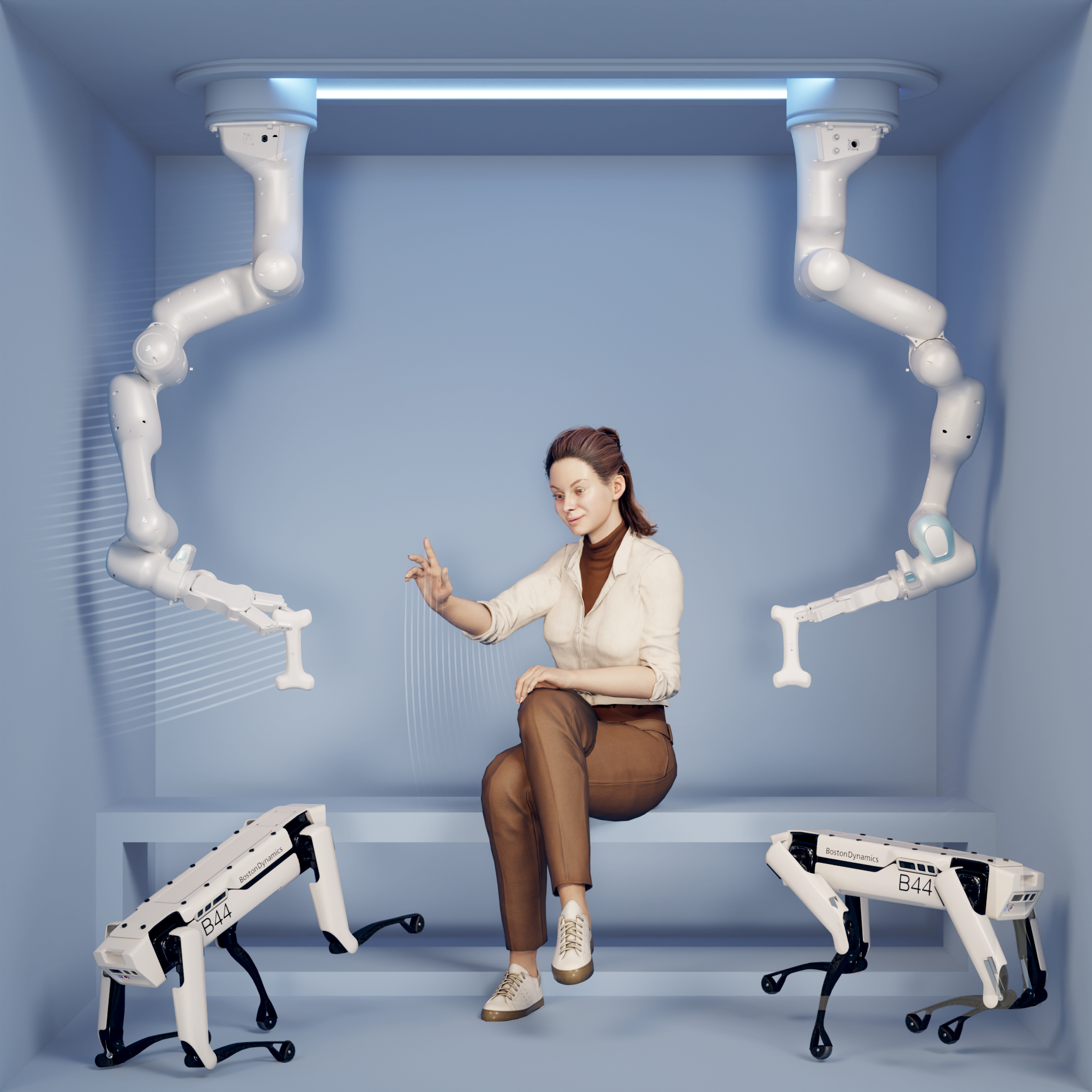
C3 Room

Robotics

C3 conducts research on networked and AI-enabled robotic platforms to support the U floor with mobile, social, and massively collaborating robots.

Key Questions

This question focuses on how to set up multiple robots that can communicate and collaborate in real-time, improving their ability to work together autonomously.

This question looks at how new sensor technologies can help robots understand and respond to their environment more accurately, enabling more intelligent behaviors.

This investigates how advanced computing technologies, such as analog or neuromorphic computing, can make robots more energy-efficient and reliable.

Approach

AI-driven robotics for enhanced interaction and collaboration; integration of advanced sensors and actuators.

Expected Results

Advanced multi-robot systems with enhanced autonomy, communication, and interaction.

Our Latest Research Results

  • Revolutionary Neural Learning Unit Accelerates On-Device AI Training While Cutting Energy Consumption

    Whether it is a robotic arm in an automated factory, an autonomous vehicle navigating a warehouse, or haptic gloves in virtual reality—precise real-time orientation tracking is essential. A new study ...

  • When Biology Meets Engineering – Controlling Physical Systems with Living Neural Networks

    Could the future of computing be biological? As we look beyond traditional silicon chips for more adaptive and energy-efficient solutions, a fascinating question arises: Can we use Synthetic Biologic ...

  • Revolutionizing 5G for Mission-Critical Applications – A New Era of Reliability and Low Latency

    As 5G and future cellular networks evolve to support critical real-time applications like telesurgery, remote robotics, and autonomous driving, balancing extreme reliability with ultra-low latency be ...

  • Designing the Perfect Touch – How Soft Actuators Meet Human Perception

    Can a glove integrated with liquid dielectric actuators change the way we interact with virtual worlds? A new collaborative study explores exactly that—building a crucial bridge between soft robotics ...