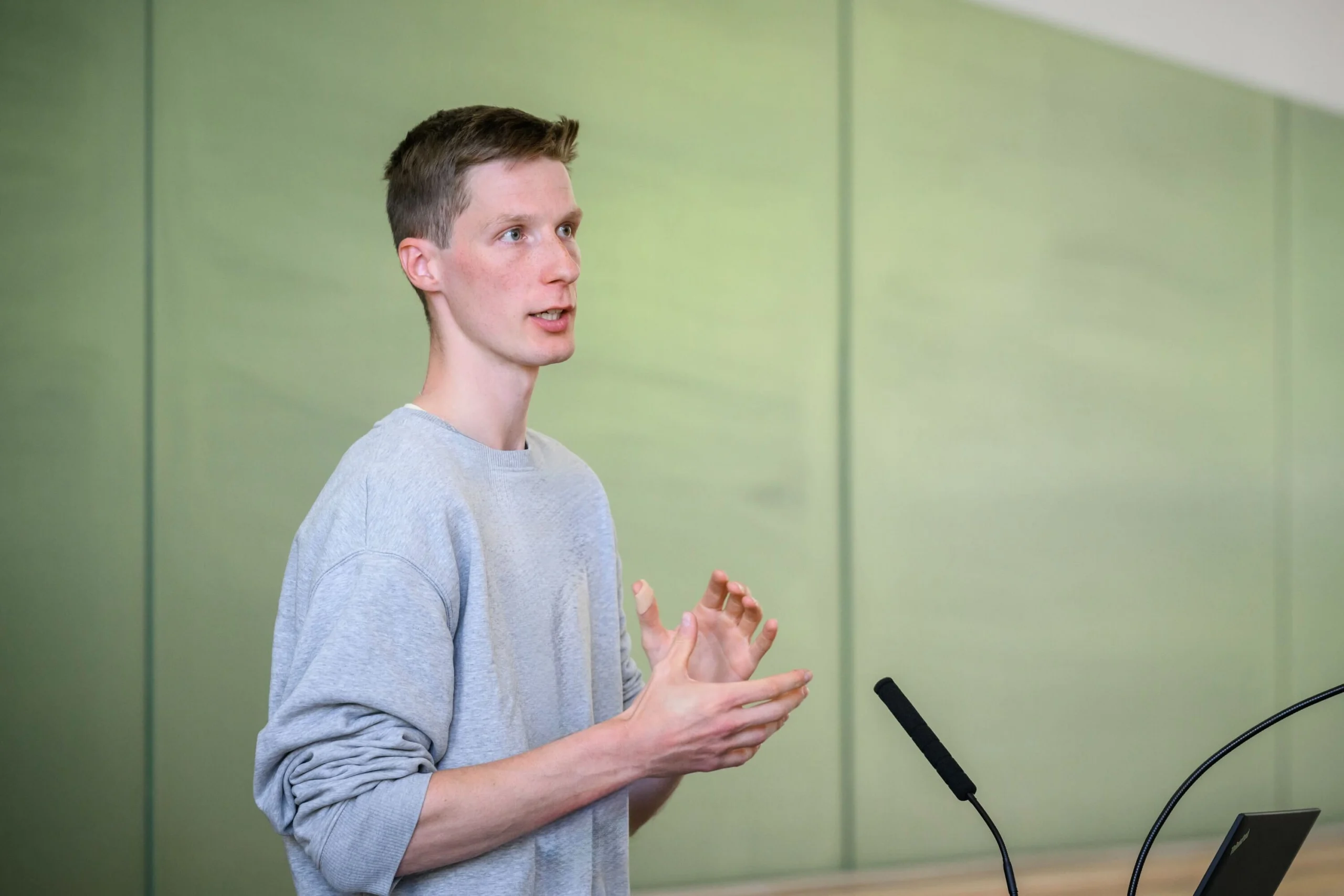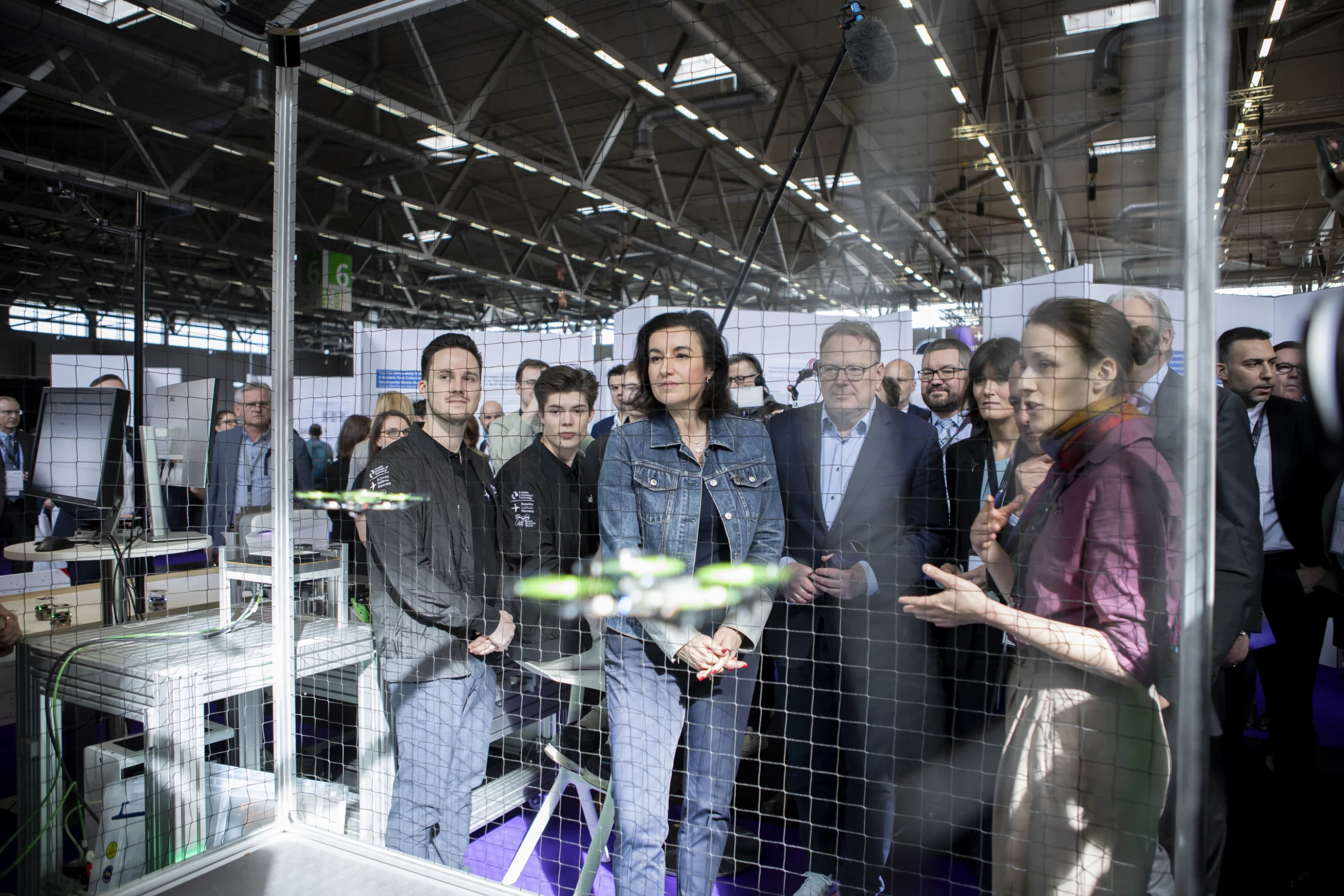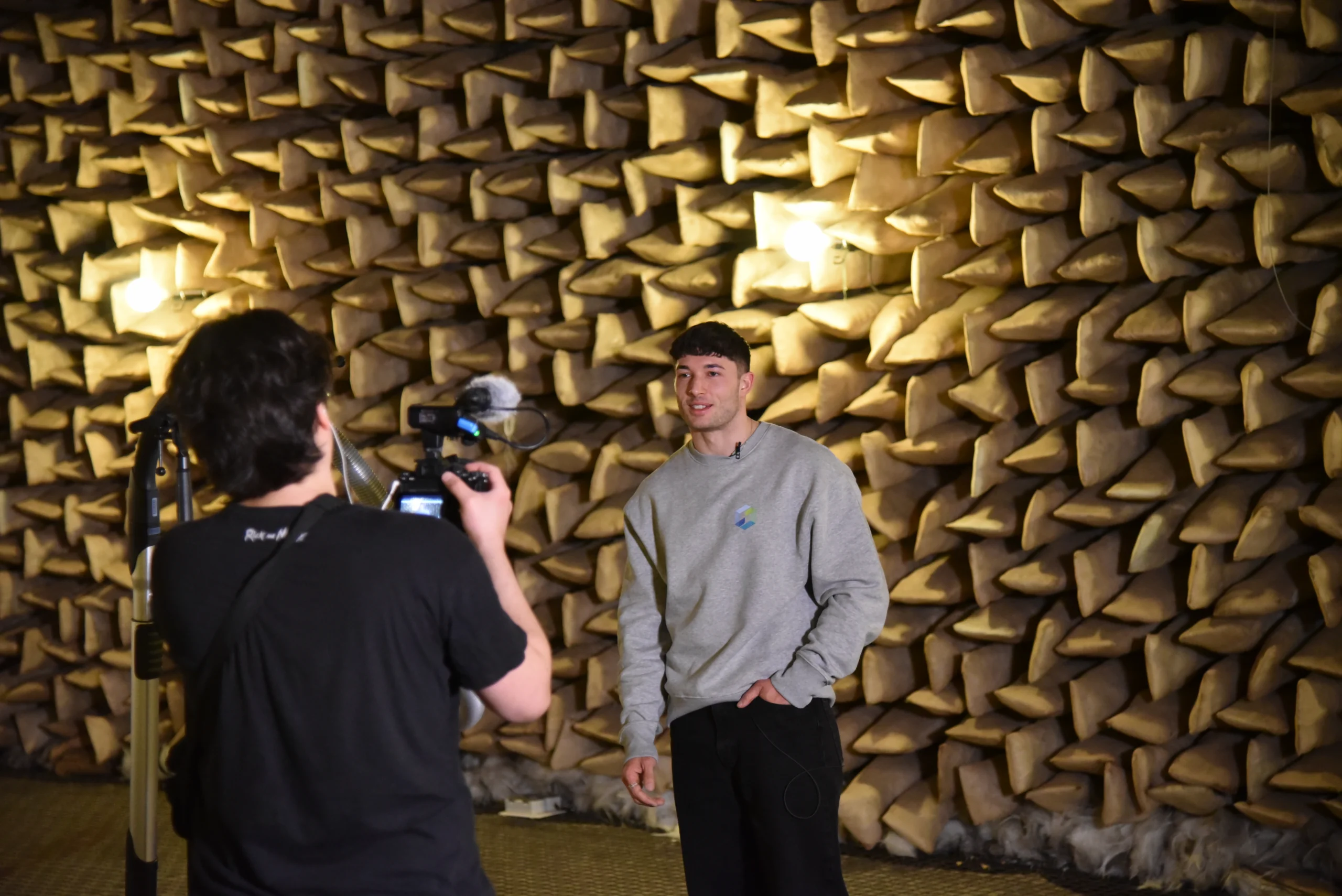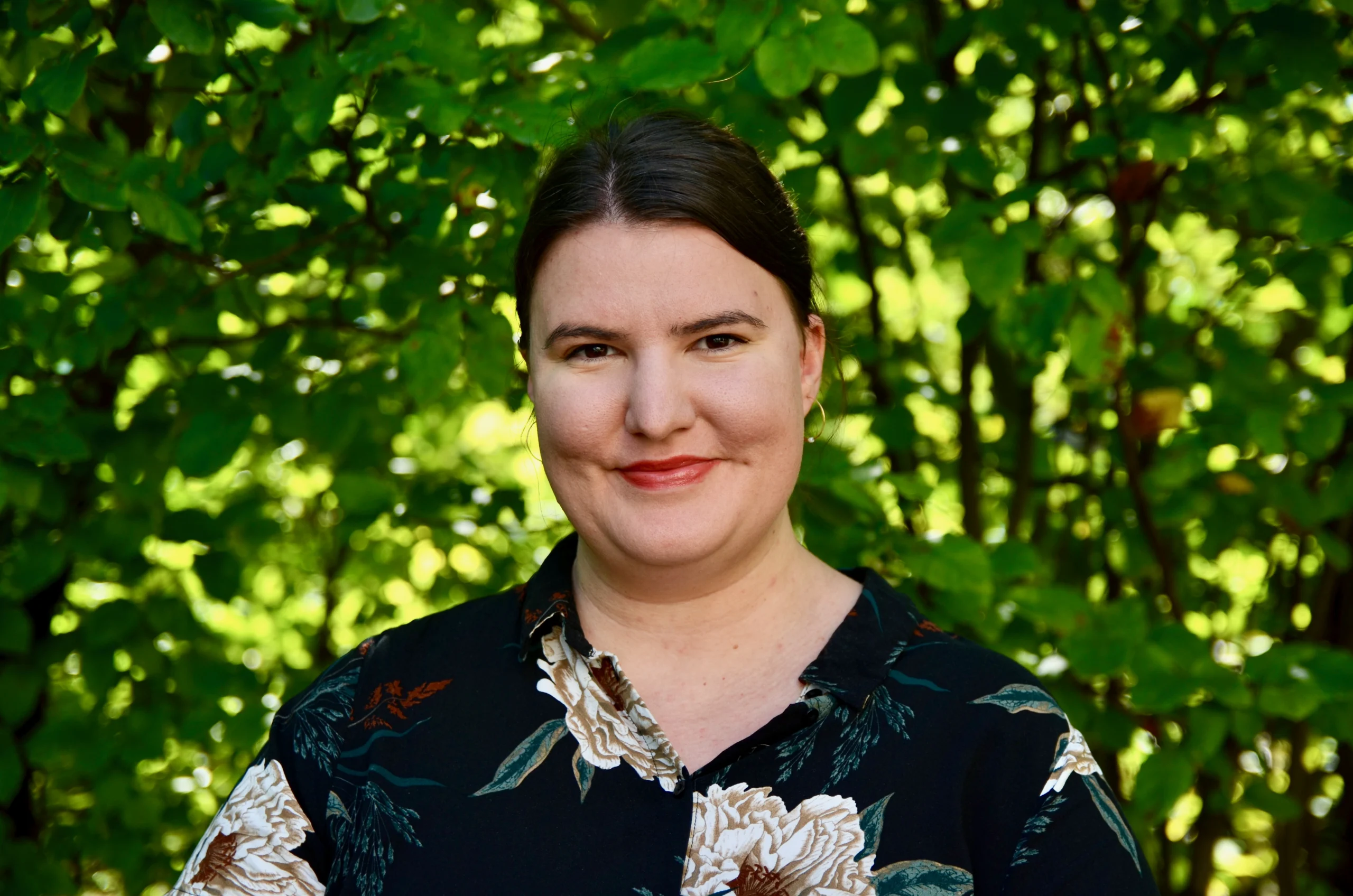
In a world-class research environment like CeTI, “excellence” requires more than just individual brilliance – it needs structure, coordination, and a shared vision. Our Junior Research Group Leaders are the “conductors” of this scientific orchestra. We sat down with Pit to discuss his role in managing the technological backbone of the Tactile Internet.
CeTI: Pit, what does the title “Junior Research Group Leader” actually mean in the context of an Excellence Cluster?
Pit: You can think of this role as a scientific orchestrator. As a Junior Research Group Leader, I have several years of research experience and now take on the responsibility of coordinating an interdisciplinary group. This involves aligning professors, principal investigators, postdocs, and PhD students. The goal is to make our collective work efficient while maintaining a cooperative environment where the research questions always come first.
CeTI: What is your specific role within that structure?
Pit: I act as the interface. I connect the various researchers within my area and serve as a link to the CeTI Program Office. I ensure that our research goals are clearly defined and successfully implemented. My focus is split between scientific content and the administrative tasks that keep the engine running.
CeTI: You lead the “Communication-Oriented Research” area. Why is this area considered the “backbone” of CeTI?
Pit: Because we provide the essential infrastructure. Our area unites multiple layers: from the Fundamental Floors (Computing, Communication & Sensing) to the Methods Floors (AI, Information Theory) and the Component Floor (Network of Networks). Without this backbone, our various use cases – whether in medicine or industry – wouldn’t have the communication and computing power they need to collaborate across projects.
CeTI: What are your core tasks on a day-to-day basis?
Pit: My work revolves around four key pillars:
- Coordination: Streamlining activities to create synergies between different researchers.
- Organization & Communication: Hosting meetings, brainstorming sessions, and workshops to foster interdisciplinary exchange.
- Problem Solving: Being the point of contact for team members regarding both administrative and scientific questions.
- Research Alignment: Keeping an eye on the “big picture” to steer all activities toward meaningful innovation.
CeTI: What is the personal “added value” of this position for you?
Pit: It’s an incredible opportunity to grow both professionally and personally. Managing complex research projects and working in such a diverse, interdisciplinary team challenges you every day. You don’t just develop technical solutions; you learn how to actively advance a scientific community.
Picture: © Frank Grätz