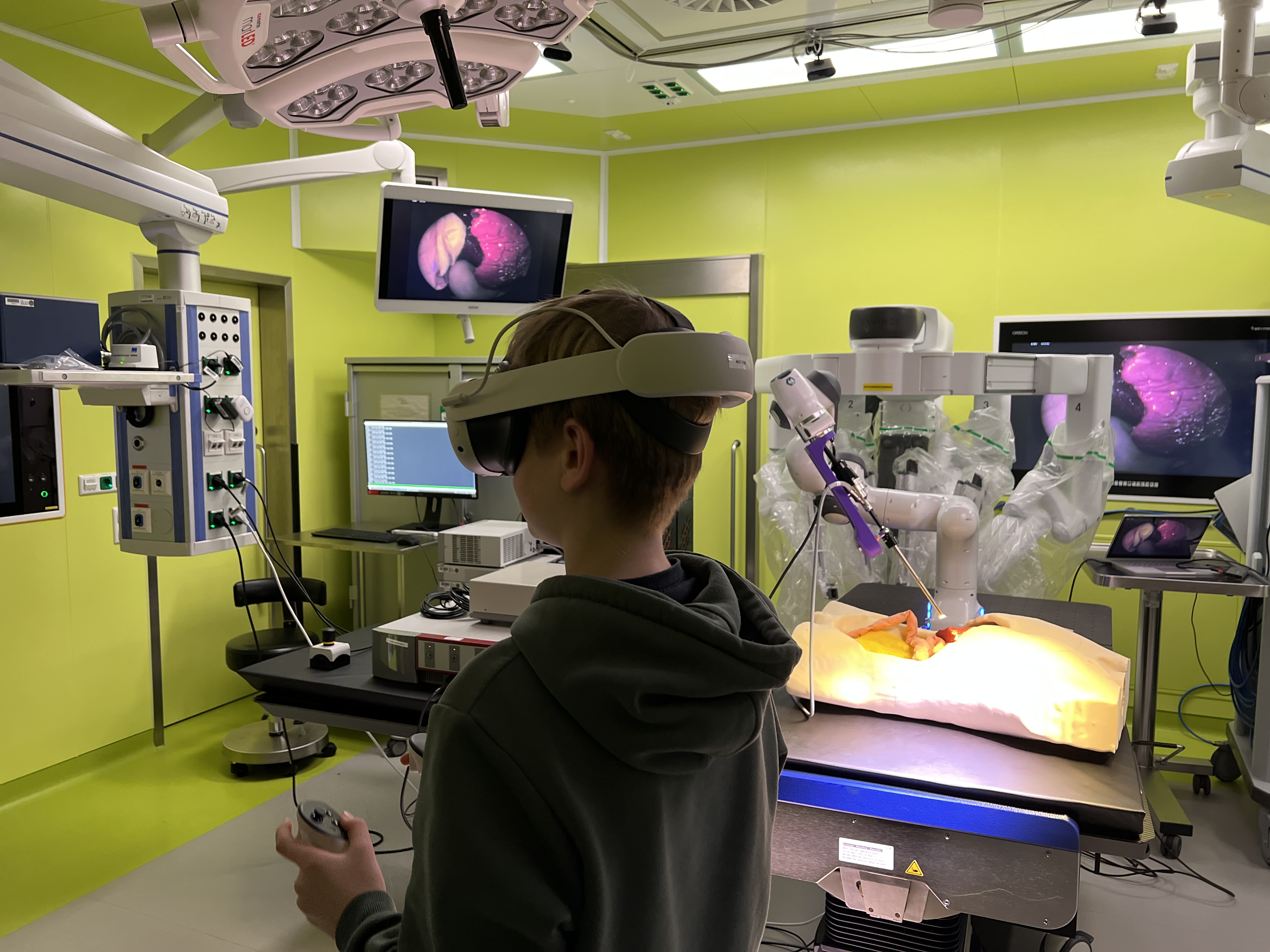
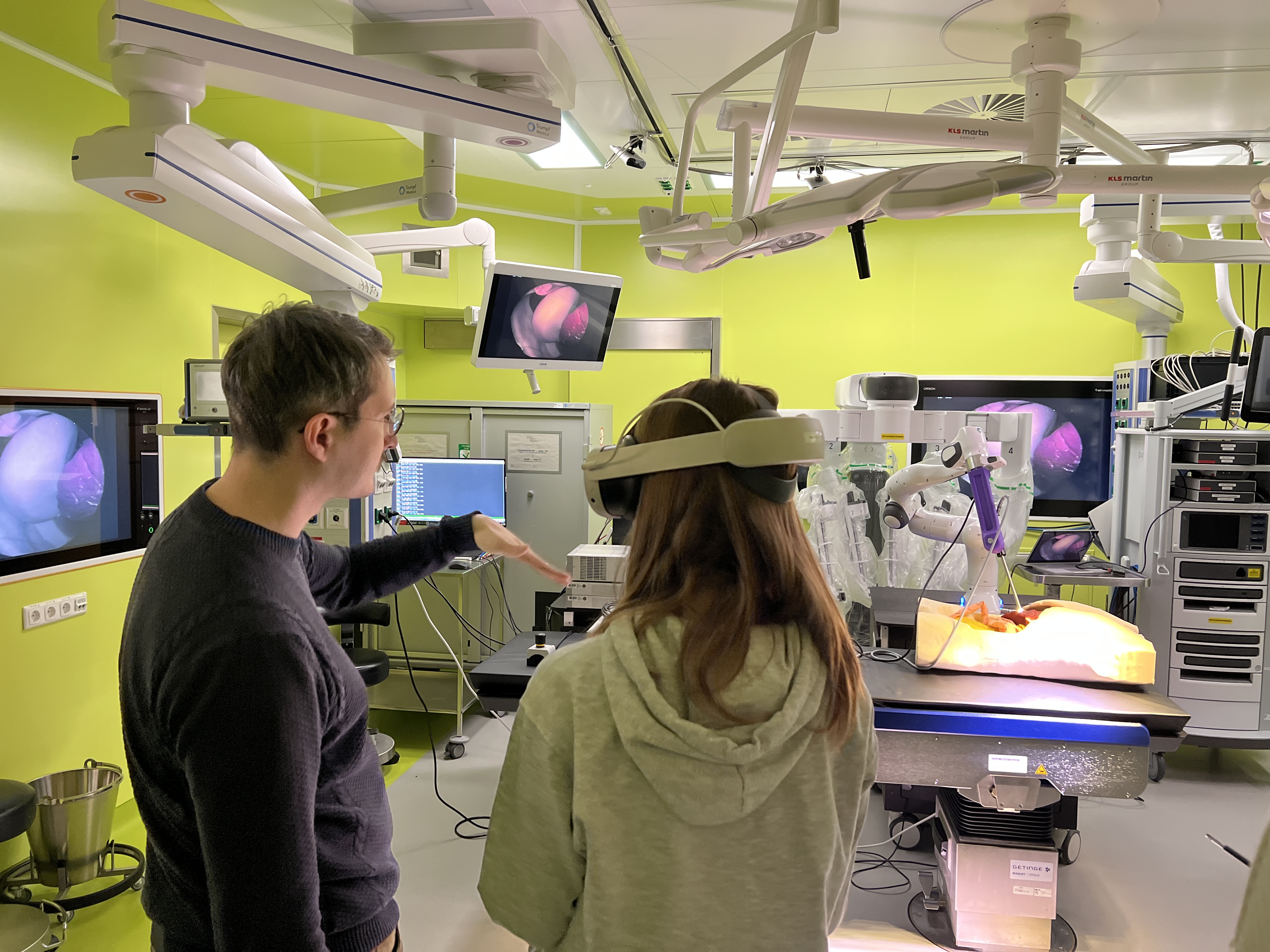
How are robotic systems shaping today’s and tomorrow’s medical practice? This question was explored by motivated students during a recent excursion to the National Center for Tumor Diseases (NCT/UCC) Dresden.
The visit took place as part of a CeTI Education Workshop and began with an introduction to user interfaces and their systematic development. Topics included understanding user needs, designing intuitive interaction concepts, and validating them through testing and real-world application. This provided participants with a solid foundation for understanding how human–machine interfaces enable the effective use of complex technologies.
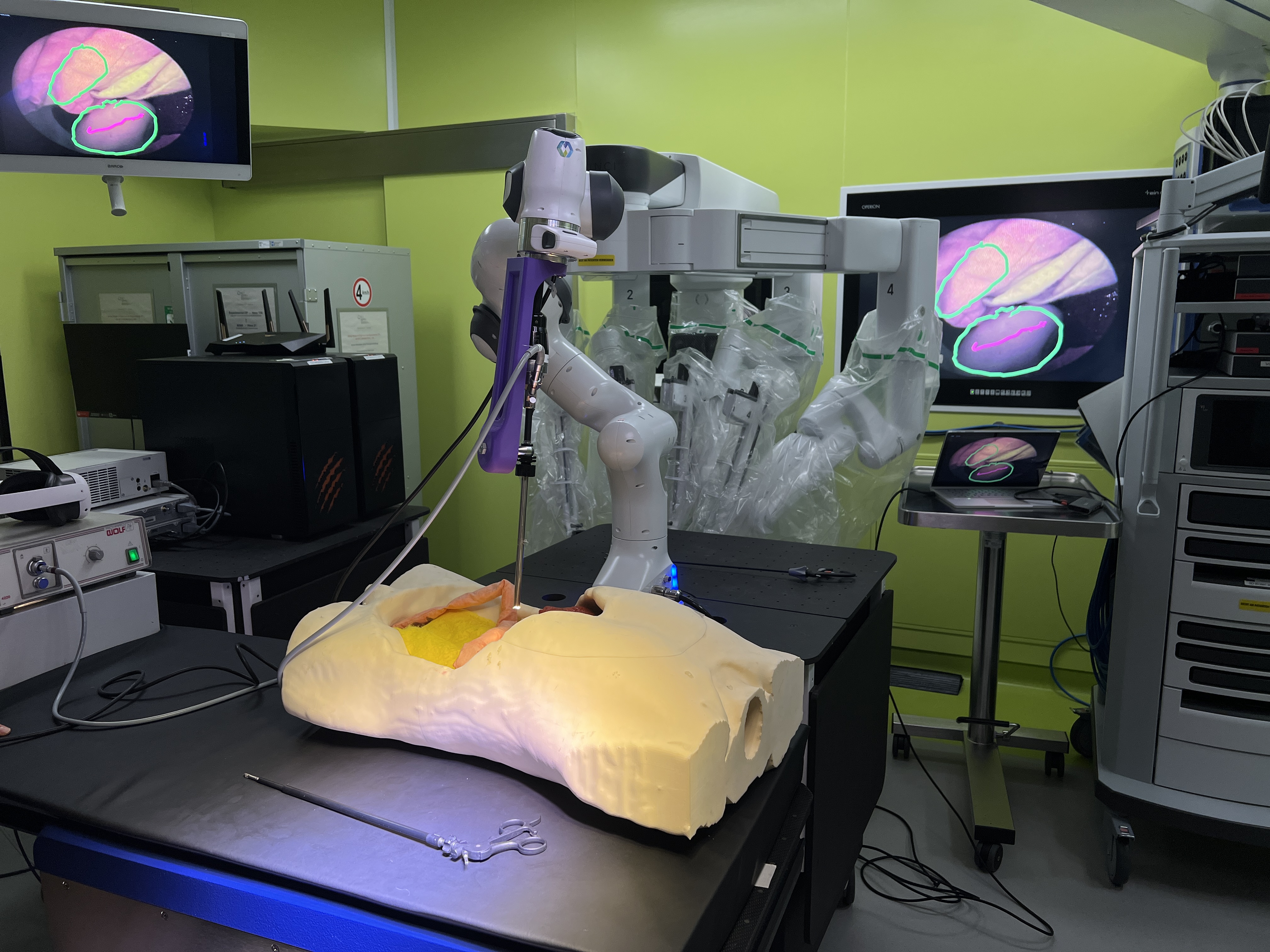
Building on this theoretical background, the group then entered a truly unique environment: the experimental operating room (ExOP), which is used exclusively for research purposes. There, students gained live insights into how robotic systems already support surgeons today and how robotics and artificial intelligence are being translated into modern medical procedures.
Overall, the excursion offered an inspiring glimpse into the future of medical robotics and human–machine interaction, highlighting the impact of interdisciplinary research on the medicine of tomorrow.