The JUNIORDOKTOR talent development program, which is regularly booked out, is an important project of the Dresden – Stadt der Wissenschaft network. At around 100 free events per edition, children and young people come into contact with research topics at around 30 universities, research institutions and technology-oriented companies. The declared aim is to promote curiosity, ambition and a thirst for research among the next generation of scientists. By correctly answering a total of seven questions about the events and providing proof of seven stamps, participants earn the JUNIORDOKTOR dignity, complete with hat and certificate. Registration for schoolchildren from Dresden and the surrounding area is possible each year from September online at www.juniordoktor.de.
CeTI hosts the half-time event
Half-time at the 14th year of Dresden’s talent development program JUNIORDOKTOR: Those who collect a total of seven stamps in the approximately 100 analog and digital experiments, lectures, courses, laboratory visits and research stations for children and young people in grades 3 to 12 are awarded the honorable title. The Office for Economic Development of the State Capital Dresden coordinates the project and hosted a mid-term event with the Cluster of Excellence CeTI on March 1, 2022.
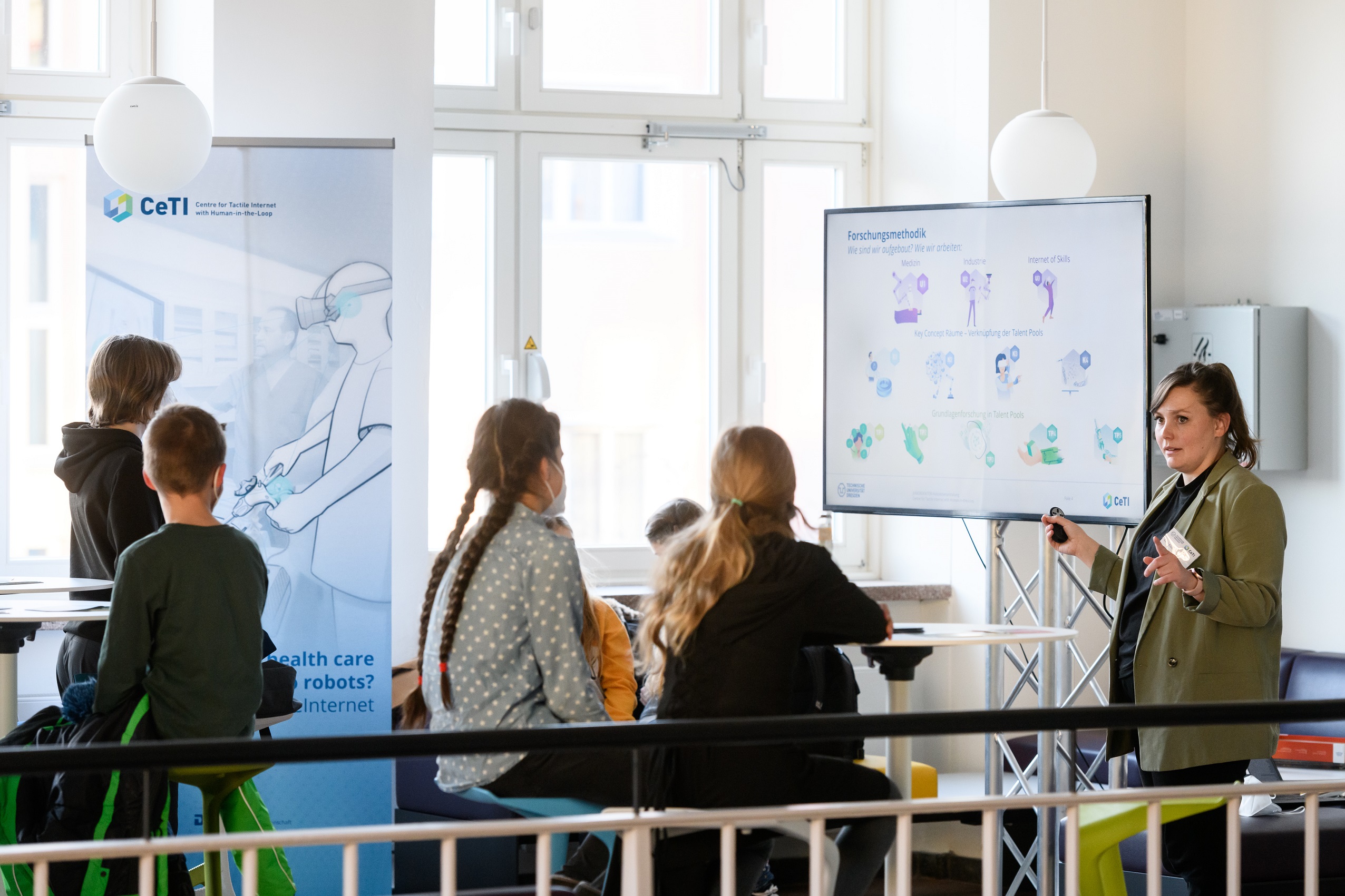
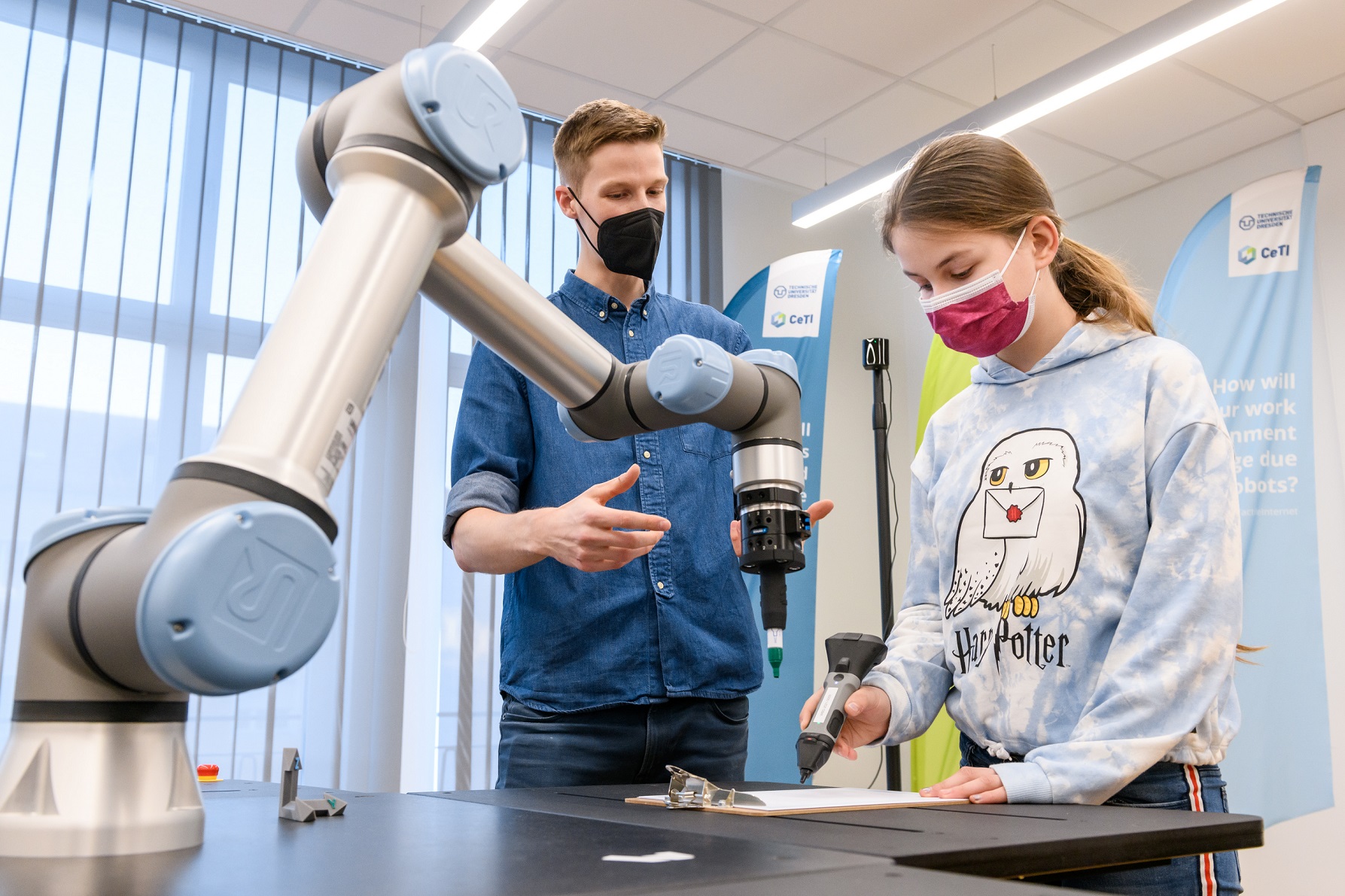
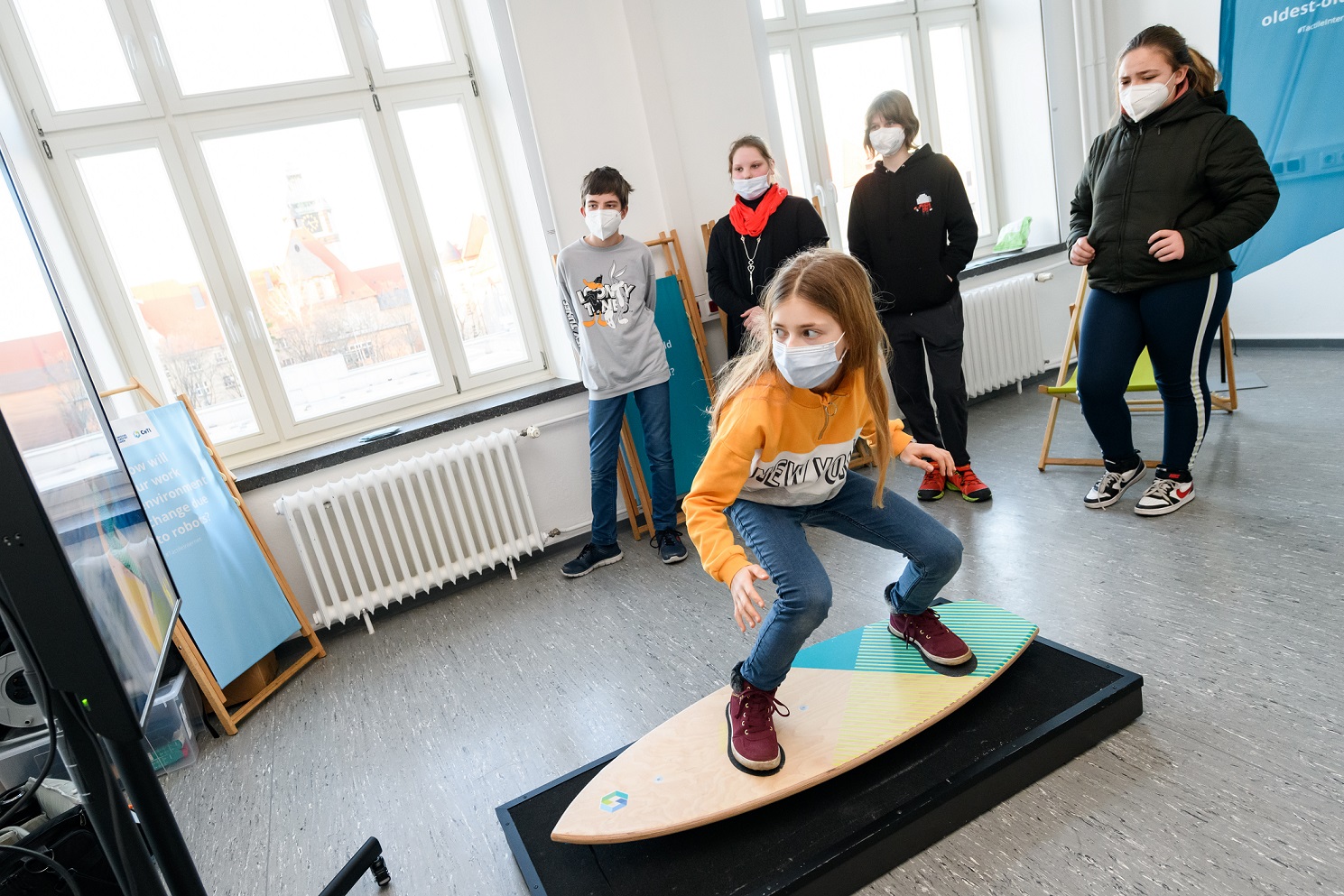
Students were able to get a taste of campus air and learn about the basics of human-machine interaction in the foyer of the Barkhausen Building. Using six demonstrators, they were able to gain insights into the fields of psychology, electrical engineering, computer science, mechanical engineering and medicine, which conveyed explosive AI research and robotics at the highest level playfully and vividly.
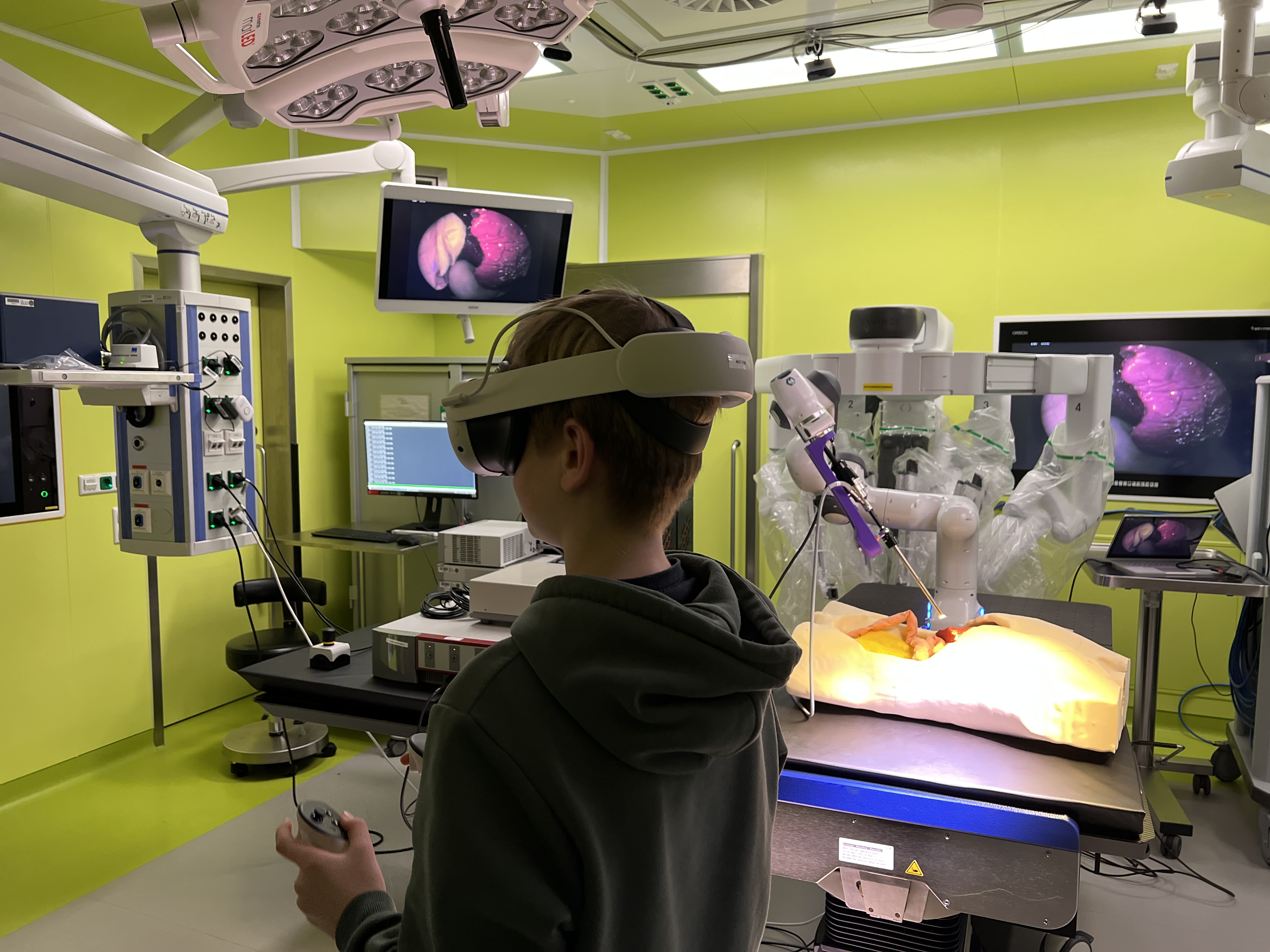
At the “Hot Wire” demonstrator, the fine motor skills of young researchers were challenged under altered visual conditions: running a bent wire on a table with a metal loop without touching the wire is already difficult. But how does our hand-eye coordination react when, in addition, the view is blocked and the course can only be observed via a camera or augmented reality – as in a minimally invasive operation? At another station, the “Cleaning Demo,” participants were transported into a virtual child’s room using VR glasses to clean up with a remote-controlled robot. In “Table Tennis with Latency,” on the other hand, they learned how to deal with delays – like when making phone calls over long distances.
Photos by Frank Grätz