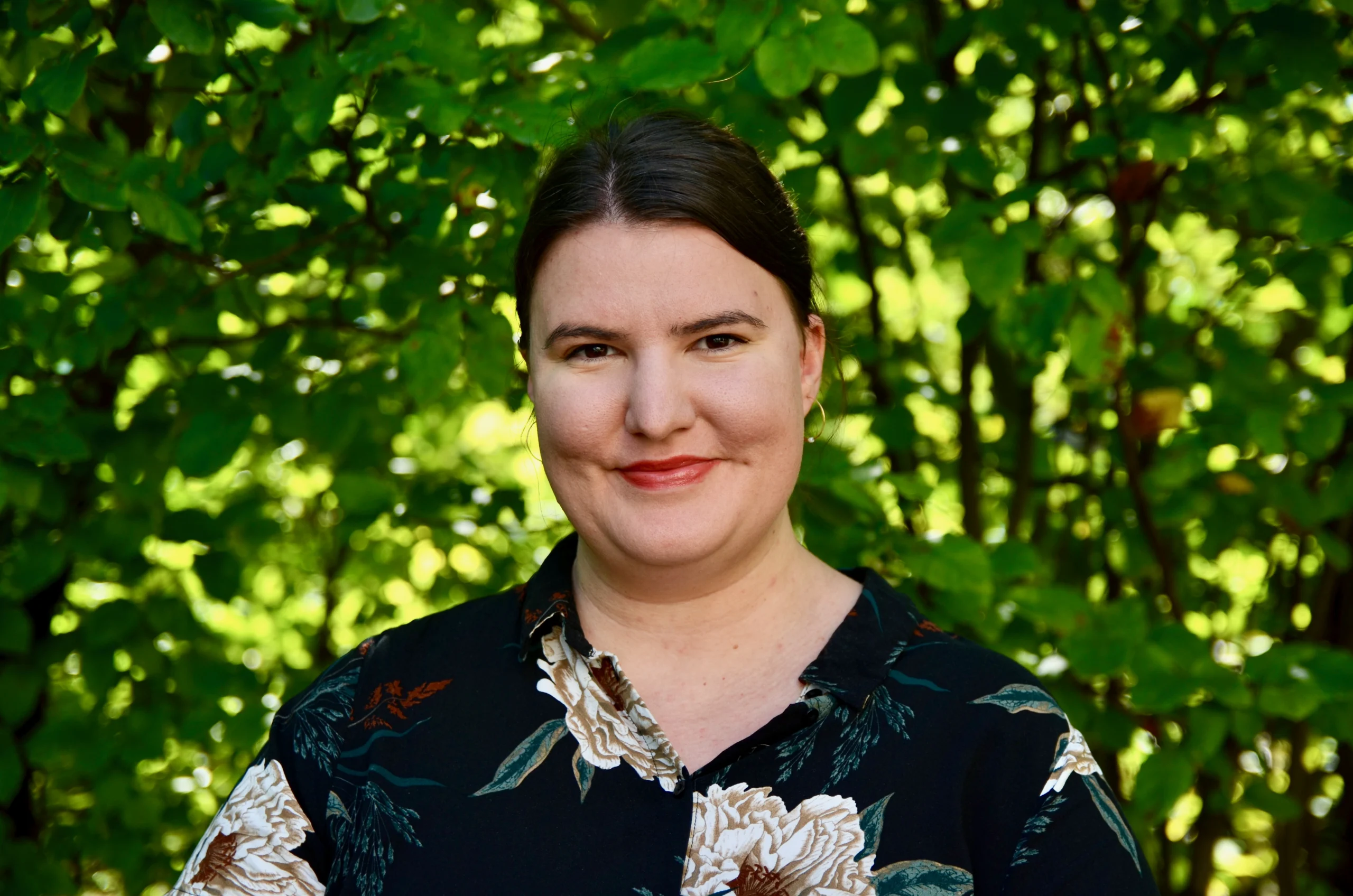
At CeTI, interdisciplinarity is not just some priority — it’s a core part of our daily work. But how do you manage the huge amounts of data and complex software programs created by psychologists, engineers, computer scientists, and medical professionals? We spoke with Lize, CeTI’s research and data manager, to discuss the backbone of modern research.
CeTI: Lize, your area of work is called STRIDDE. Can you explain the outcome vision behind that name?
Lize: Absolutely. STRIDDE stands for Software, Tools, and Research Instrumentation for Data Driven Excellence. Our goal is to establish a holistic approach that equips CeTI’s researchers with the knowledge and tools they need. By bringing software, data, and instrumentation management together into one coherent concept, we make research at CeTI more efficient, sustainable, and impactful.
CeTI: Your background is in biochemistry – quite different from robotics or electrical engineering. How did you end up leading data management at CeTI?
Lize: It might seem far removed, but I share a common experience with many PhD graduates. During my doctorate, I realized how critical structured management is. Like many others, I lacked specific training in these areas, which created huge challenges later on. That experience strongly shapes my motivation today: I want to provide the environment I wish I had back then.
CeTI: What does STRIDDE look like in practice for a researcher at CeTI?
Lize: My role is a mix of researcher, manager, scholar and teacher. I translate the latest research in data management into practical solutions and push boundaries with our unique requirements in CeTI. A great example is our work with medical doctoral students and engineers during CeTI’s first phase. Surgeons were producing massive amounts of data through complex instrumentation like the CeTI glove fabricated within CeTI and running CeTI software to produce CeTI data. Medical students would annotate that experimental data, which was then needed by computer scientists for machine learning. Together with our research software engineers, amongst others my colleague Marie Müller, we developed a custom software tool that allowed them to organize, search, and share this data in one place. It significantly boosted interdisciplinary collaboration because everyone came together to work on one joint outcome.
That’s why I like working in CeTI with the professorship of AI-based Assistance Systems in Surgery with Martin Wagner and that’s why I am most happy, that Diana Göringer with her expertise in software, and Giang Nguyen with his expertise in instrumentation guide our STRIDDE.
CeTI: Interdisciplinarity is a core value of CeTI, but it also brings challenges. What are the biggest hurdles for STRIDDE?
Lize: The main challenge is delivering solutions that work across such a diverse landscape. A psychologist has different data needs than a communication engineer. Our goal is to make research FAIR (Findable, Accessible, Interoperable, and Reusable) and build bridges without adding “red tape” or unnecessary complexity to the researchers’ day-to-day work.
CeTI: Looking ahead, what is the next step for your team?
Lize: As CeTI moves into its next phase, we are focusing on understanding the pain points within the cluster and the most wanted methods and tools to support data-driven excellence in CeTI’s collaborative work. Based on that, we want to offer targeted training to increase competence across the entire cluster and also continuously they connect to cutting edge research within CeTI to really establish a STRIDDE culture that helps CeTI excel. Personally, I deeply enjoy the collaborative spirit here. Together, we are building a foundation where data-driven excellence is the norm, not the exception.
Picture: © Christine Desroches Altamirano