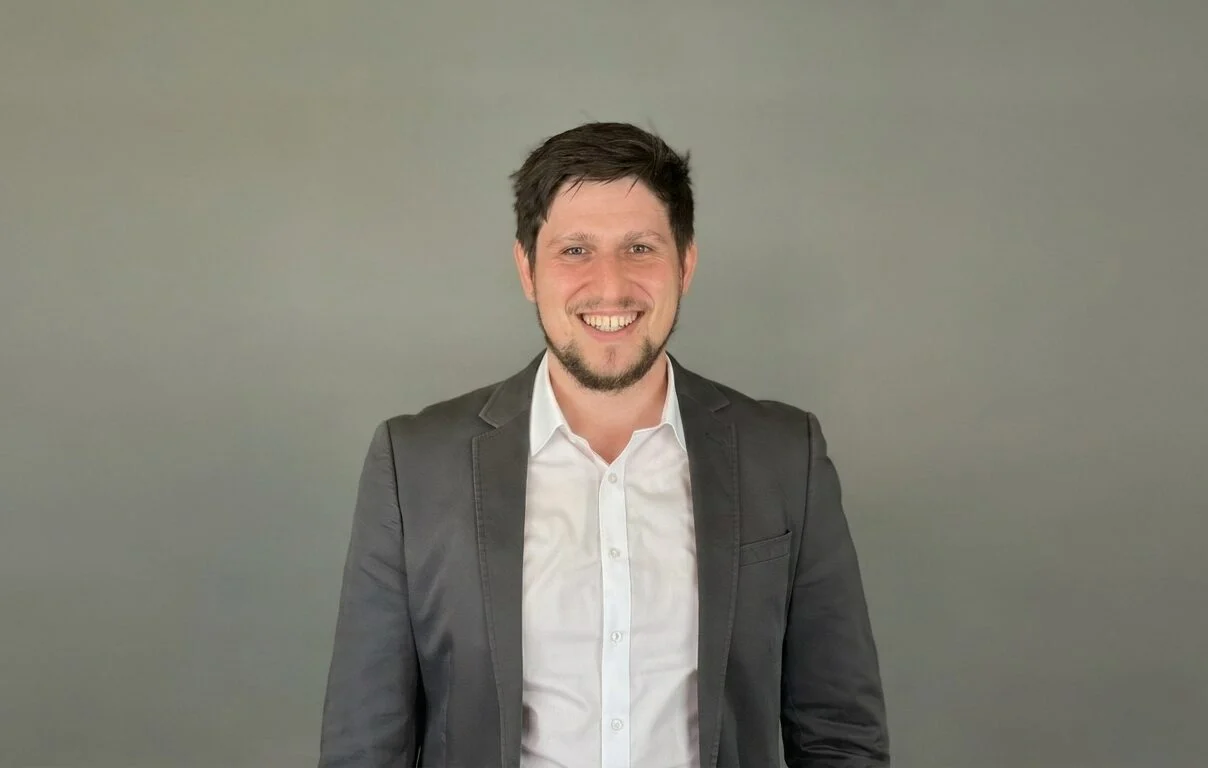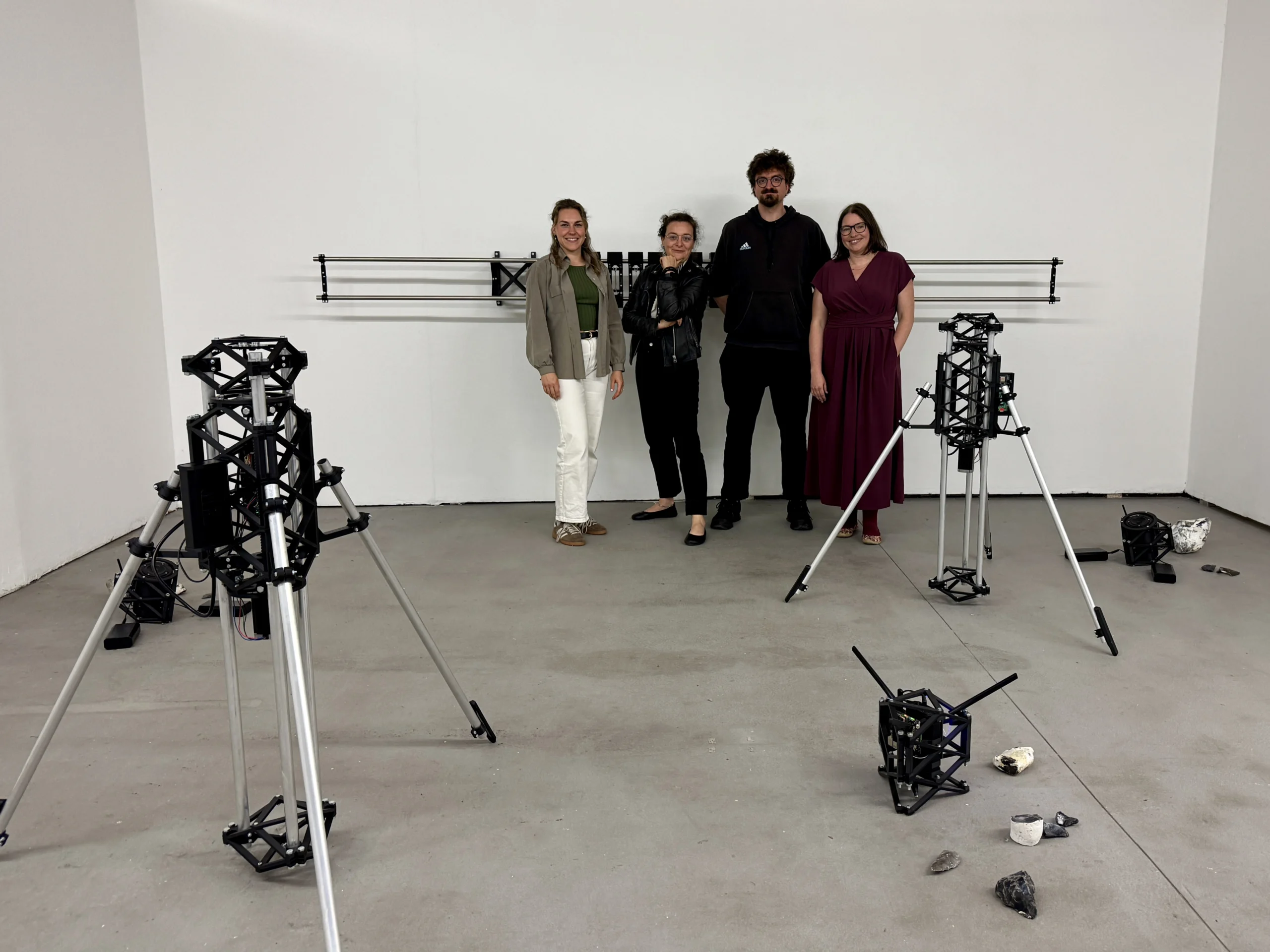
In a world-class research environment like CeTI, “excellence” requires more than just individual brilliance – it needs structure, coordination, and a shared vision. Our Junior Research Group Leaders are the “conductors” of this scientific orchestra. We sat down with Robert to discuss his role in managing the technological backbone of the Tactile Internet.
CeTI: Robert, what does the title “Junior Research Group Leader” actually mean in the context of an Excellence Cluster?
Robert: Starting from my PhD I was always interested in driving my personal scientific vision by writing a DFG grant to be able to work on my topics. As a Junior Research Group Leader I can now continue down this line. The context of the Excellence Cluster offers a unique opportunity. With my research group being embedded in such an interdisciplinary environment, there are plenty of intersections with the involved principial investigators. This removes the usual barrier to cooperation and mediates strong scientific output.
CeTI: Welche konkrete Rolle spielst du innerhalb dieser Struktur?
Robert: As an Area Manager I see myself as a mediator between the CeTI Core Team steering the cluster vision, the individual research of the principal investigators and their teams, and, of course, my research group. Within my area I am coordinating the implementation of the cluster’s scientific vision while reporting various KPIs to the Core Team.
CeTI: You lead the “Machine-Interfaces-Oriented Research” area. Why is this area considered the “frontend” of CeTI?
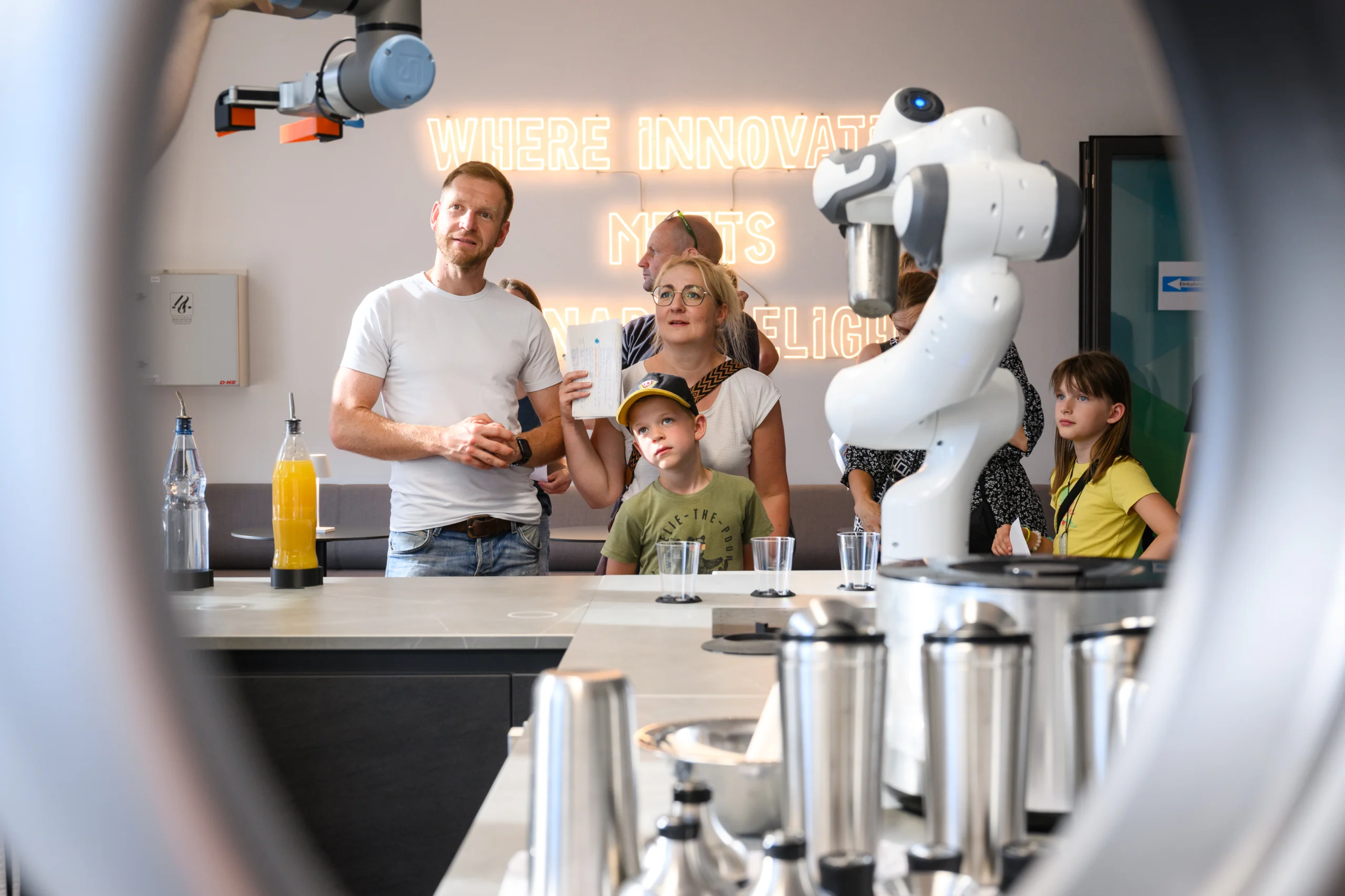
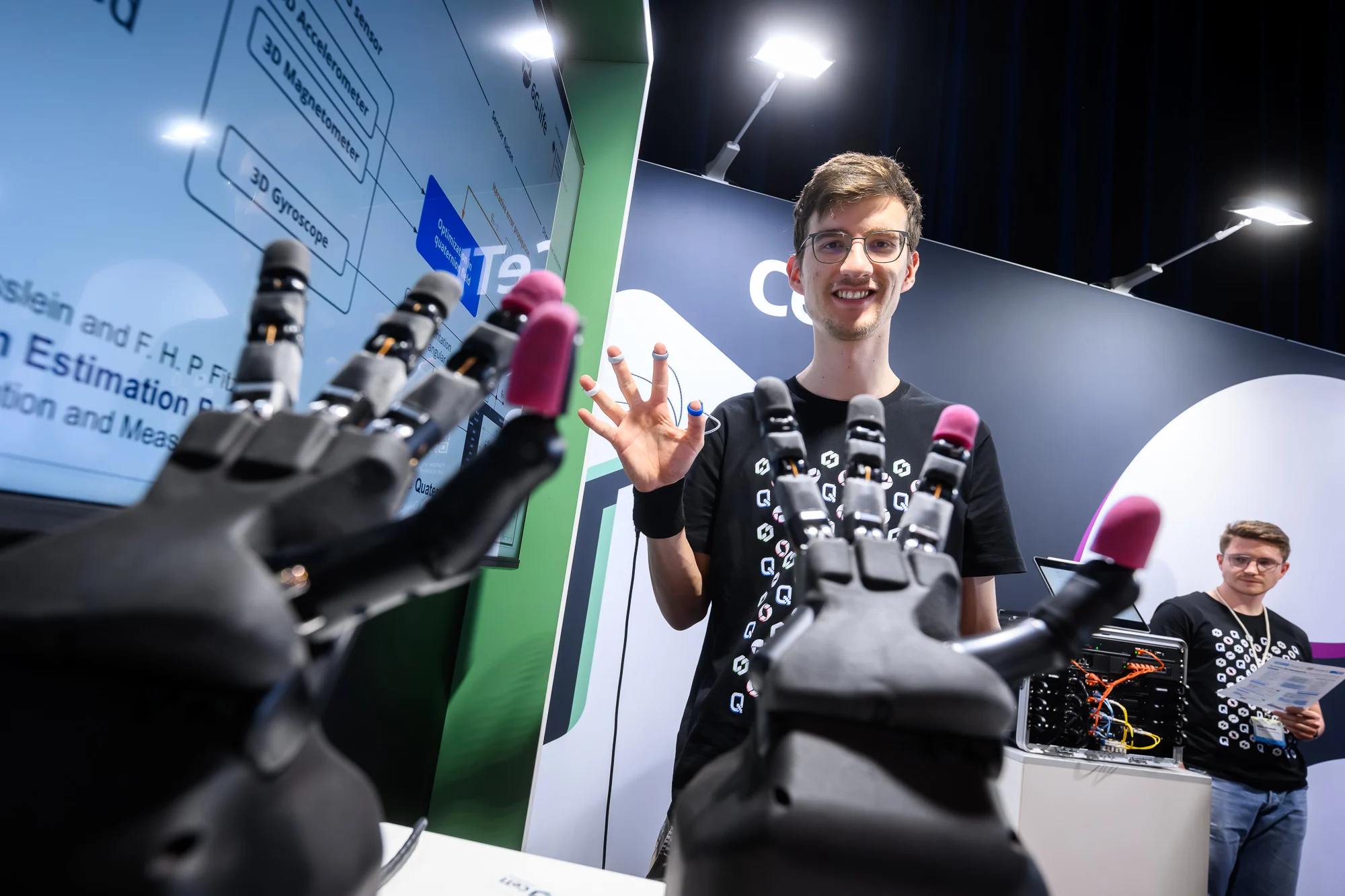
Robert: CeTI wants to enable tele-interactions beyond audio and vision through adding haptics and olfaction. While mature technologies exist for audio and vision, for these other modalities innovative machine interfaces for humans and robots need to be developed. This requires joint efforts from the Fundamental Floors (Sensors & Actuators, Electronics), the Methods Floors (AI) and the Component Floor (Peripherals, Metaverse, Robotics). This complements the communication backbone innovations to enable the various CeTI use cases spanning medicine, rehabilitation, industry, education and space.
CeTI: Was sind deine täglichen Kernaufgaben?
Robert: My work has four main facets:
- Organization: Planning meetings to foster productive exchange
- Communication: gather information from the team, moderating brain storming sessions, and distribute information
- Strategizing: Identifying Intersections of various research and rallying the team behind joint vision leveraging synergies.
- Koordination Tracking progress and reporting updates to cluster
CeTI: Was ist für dich der persönliche „Mehrwert“ dieser Stelle?
Robert: Being in such an interdisciplinary role enables me to learn about the challenges and potential solutions in several fields adjacent to my scientific core interests. It’s also coming with a great sense of agency, seeing how my actions influence the progression of the cluster. It’s a great opportunity for personal growth.