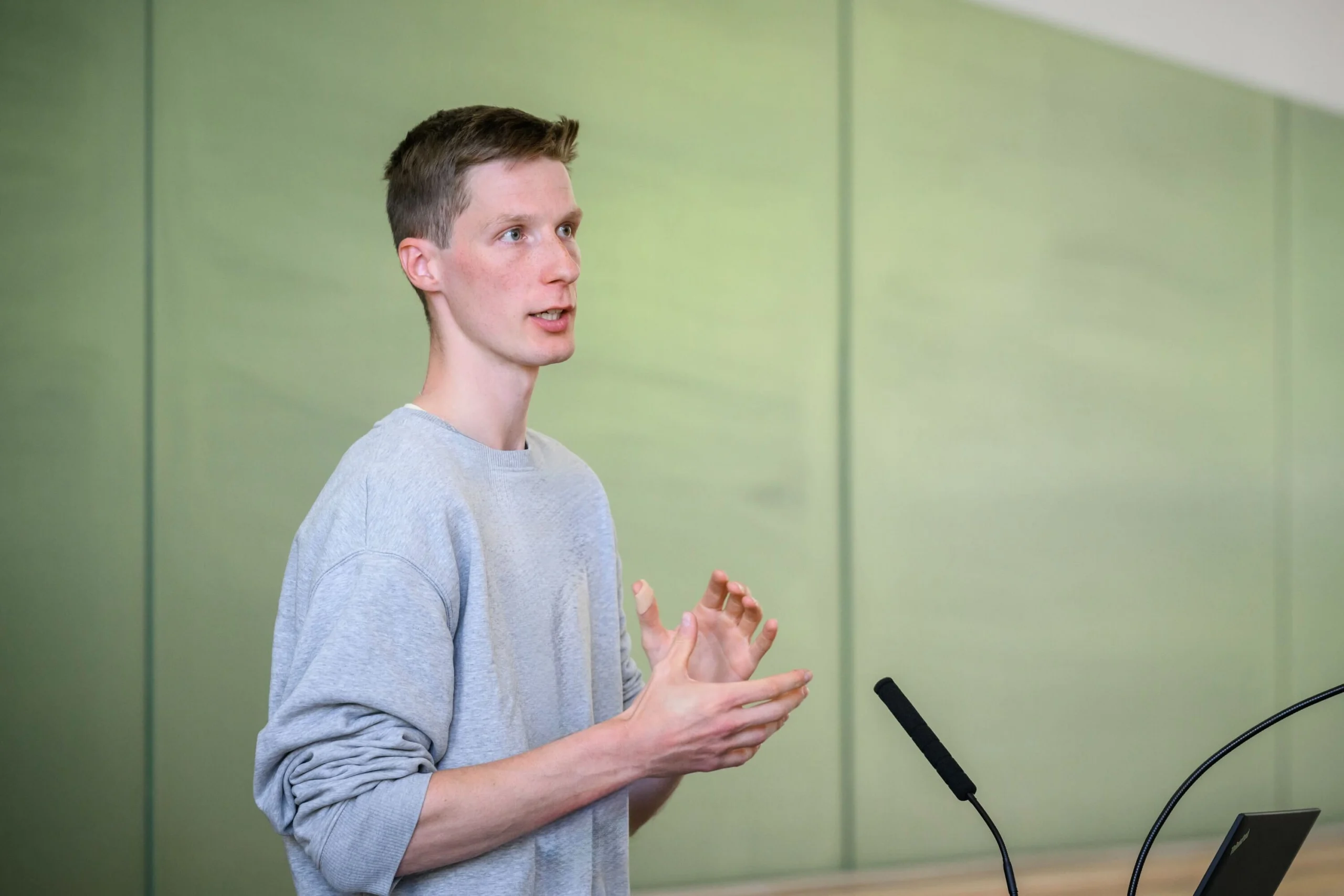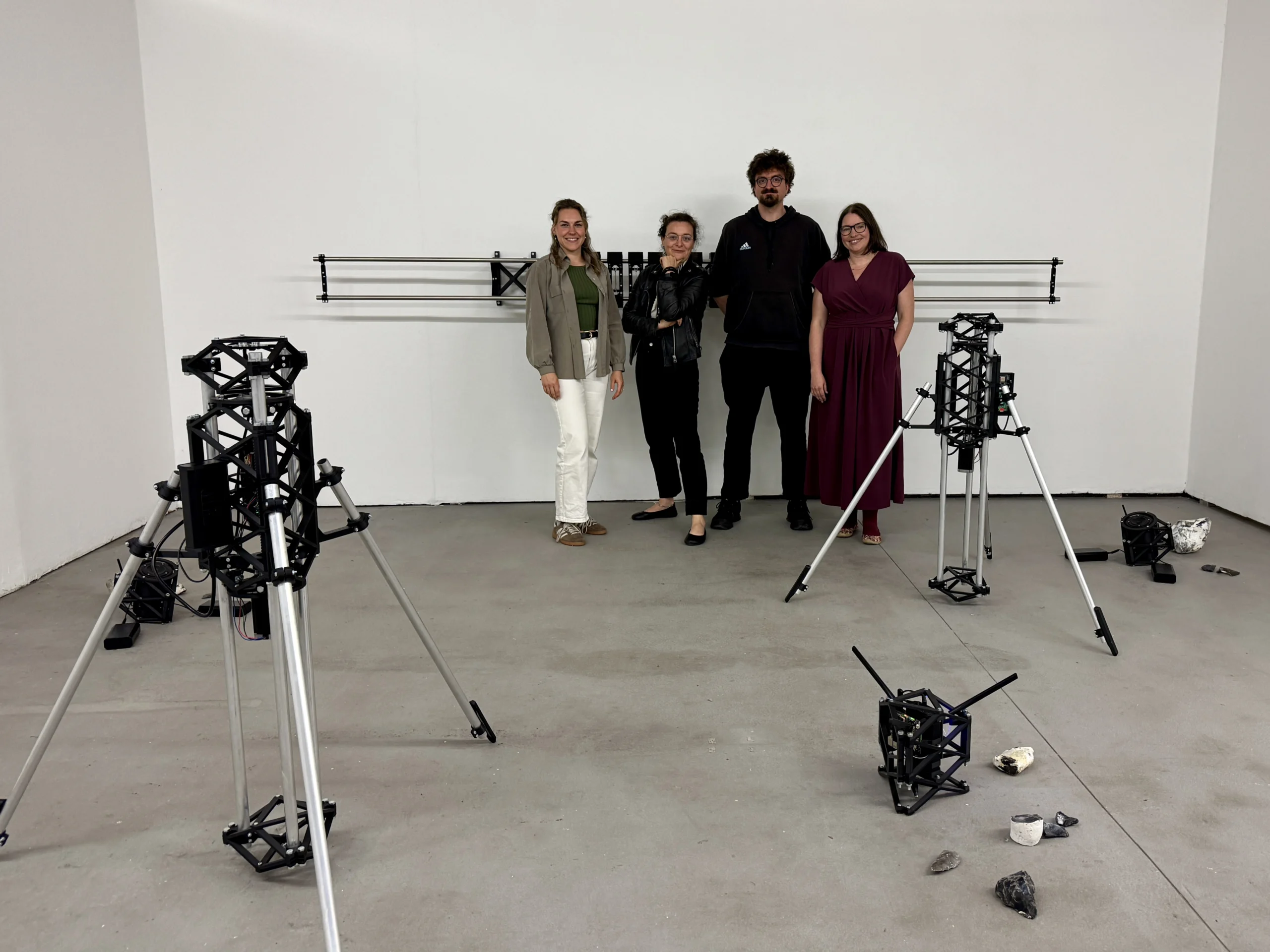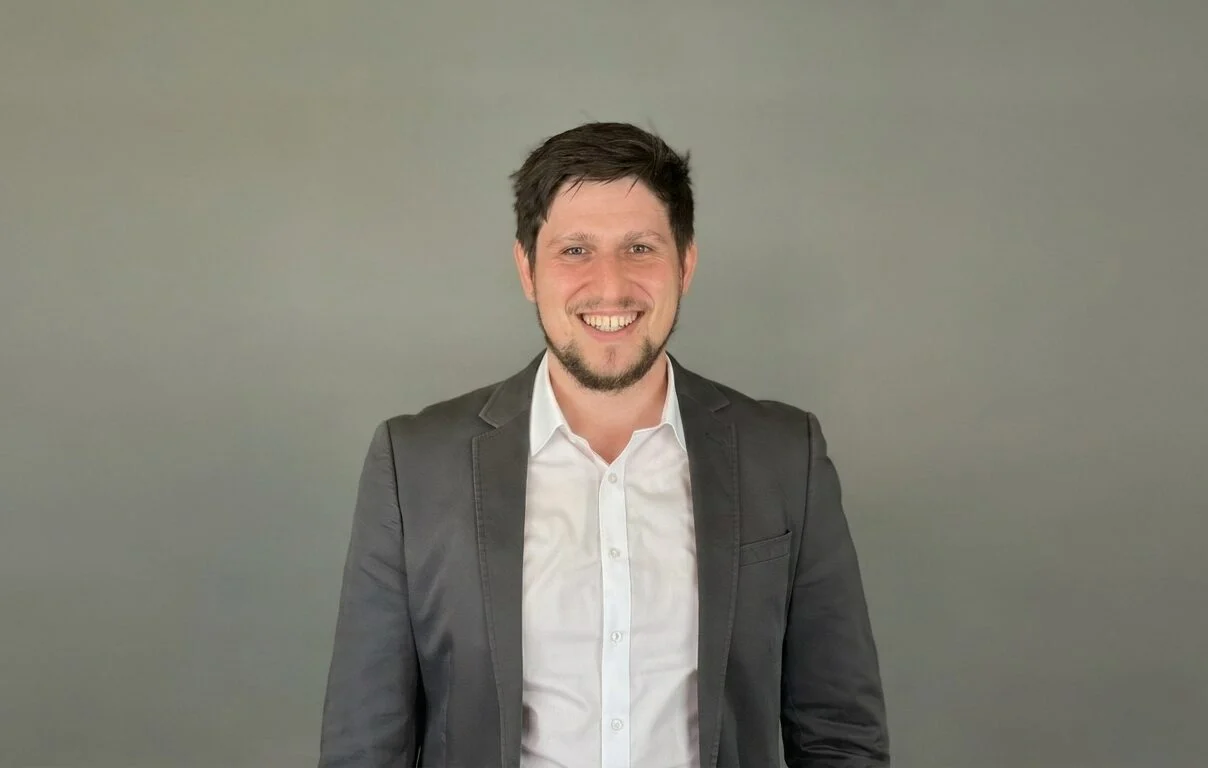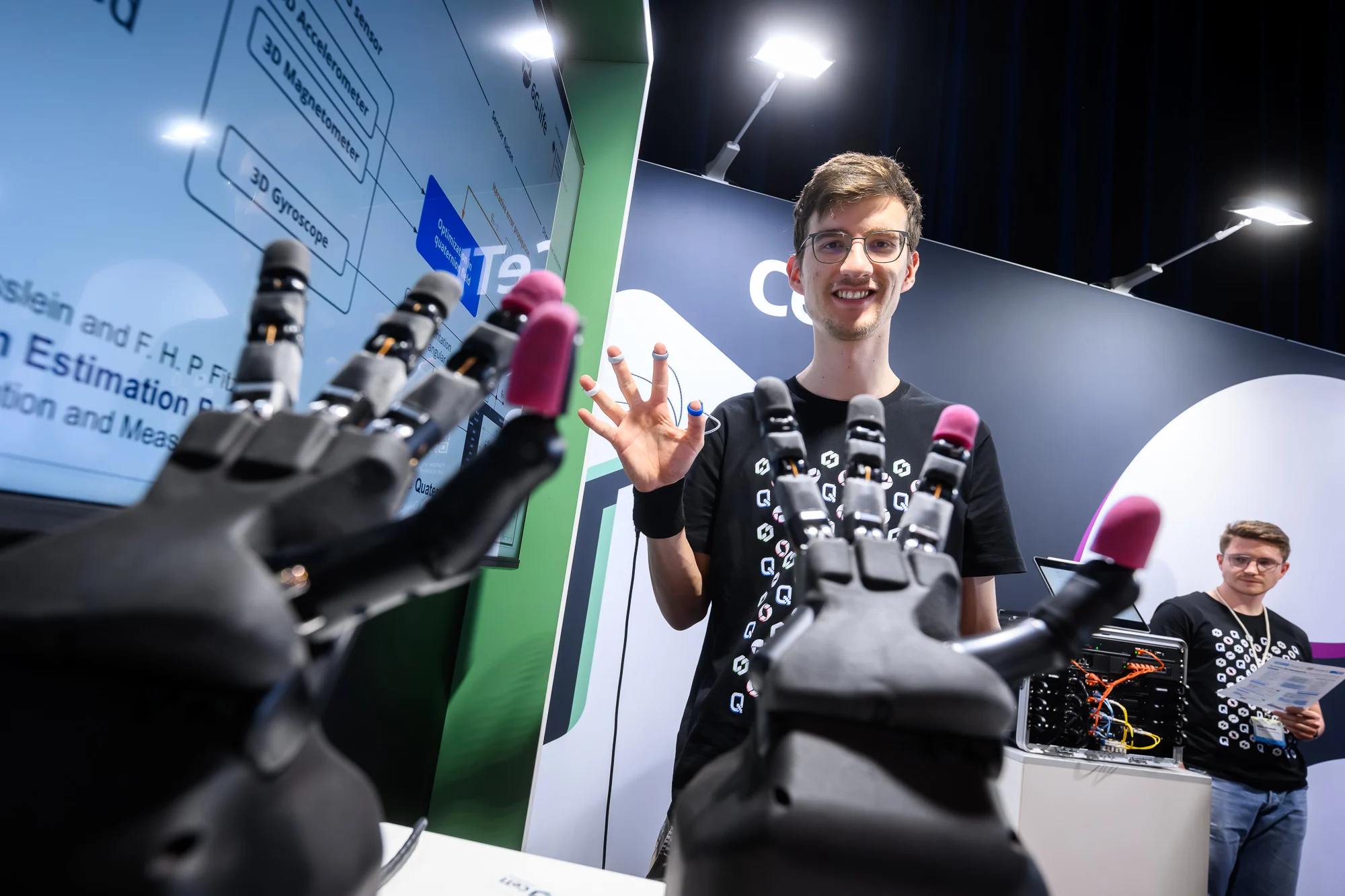
In einem professionelem Forschungsumfeld wie bei CeTI erfordert „Exzellenz“ mehr als nur individuelle Brillanz – sie braucht Struktur, Koordination und eine gemeinsame Vision. Unsere Junior-Forschungsgruppenleiter sind die „Dirigenten“ dieses wissenschaftlichen Orchesters. Wir haben uns mit Pit Hofmann zusammengesetzt, um über seine Rolle bei der Gestaltung des technologischen Fundaments des taktilen Internets zu sprechen.
CeTI: Pit, was bedeutet der Titel „Junior-Forschungsgruppenleiter“ eigentlich im Zusammenhang mit einem Exzellenzcluster?
Pit: Man kann sich diese Rolle als eine Art wissenschaftlichen Koordinator vorstellen. Als Junior-Forschungsgruppenleiter verfüge ich über mehrjährige Forschungserfahrung und übernehme nun die Verantwortung für die Koordination einer interdisziplinären Gruppe. Dazu gehört es, Professoren, Projektleiter, Postdoktoranden und Doktoranden aufeinander abzustimmen. Das Ziel ist es, unsere gemeinsame Arbeit effizient zu gestalten und gleichzeitig ein kooperatives Umfeld zu schaffen, in dem die Forschungsfragen stets im Vordergrund stehen.
CeTI: Welche konkrete Rolle spielst du innerhalb dieser Struktur?
Pit: Ich fungiere als Schnittstelle. Ich stelle den Kontakt zwischen den verschiedenen Forschern in meinem Bereich her und bin das Bindeglied zum CeTI-Programmbüro. Ich sorge dafür, dass unsere Forschungsziele klar definiert und erfolgreich umgesetzt werden. Mein Fokus liegt sowohl auf den wissenschaftlichen Inhalten als auch auf den administrativen Aufgaben, die den Betrieb am Laufen halten.
CeTI: Sie leiten den Bereich „Kommunikationsorientierte Forschung“. Warum gilt dieser Bereich als das „Grundgerüst“ von CeTI?
Pit: Weil wir die unverzichtbare Infrastruktur bereitstellen. Unser Bereich vereint mehrere Ebenen: von den Fundamental Floors (Computing, Communication & Sensing) über die Methods Floors (KI, Informationstheorie) bis hin zum Component Floor (Netzwerk der Netzwerke). Ohne dieses Rückgrat hätten unsere verschiedenen Anwendungsfälle – sei es in der Medizin oder in der Industrie – nicht die Kommunikations- und Rechenleistung, die sie benötigen, um projektübergreifend zusammenzuarbeiten.
CeTI: Was sind deine täglichen Kernaufgaben?
Pit: Meine Arbeit stützt sich auf vier Hauptsäulen:
- Koordination Optimierung der Aktivitäten, um Synergien zwischen verschiedenen Forschenden zu schaffen.
- Organisation & Kommunikation Durchführung von Besprechungen, Brainstorming-Sitzungen und Workshops zur Förderung des interdisziplinären Austauschs.
- Problemlösung Als Ansprechpartner für die Teammitglieder in administrativen und wissenschaftlichen Fragen fungieren.
- Forschungsschwerpunkte: Das „große Ganze“ im Blick behalten, um alle Aktivitäten auf sinnvolle Innovationen auszurichten.
CeTI: Was ist für dich der persönliche „Mehrwert“ dieser Stelle?
Pit: Es ist eine unglaubliche Chance, sich sowohl beruflich als auch persönlich weiterzuentwickeln. Die Leitung komplexer Forschungsprojekte und die Arbeit in einem so vielfältigen, interdisziplinären Team stellen dich jeden Tag vor neue Herausforderungen. Du entwickelst nicht nur technische Lösungen, sondern lernst auch, wie man eine wissenschaftliche Gemeinschaft aktiv voranbringt.
Bild: © Frank Grätz